
Rabies, with its near 100 % fatality rate in both humans and animals, remains a significant global threat, claiming approximately 59,000 human lives each year. Since dogs are the primary carriers of the virus, tackling this fatal zoonosis requires targeting them. The success of the global effort to eliminate dog-mediated human rabies by 2030 hinges on the efficiency of rabies control programs.
Rabies is a viral disease that affects the central nervous system of mammals, including humans, and is primarily transmitted through the bite of infected animals, especially dogs. While bats are also a reservoir in some regions, cross-species transmission frequently occurs from wildlife to domestic animals and humans. As a zoonotic disease, rabies causes nonspecific early symptoms, such as fever and vomiting, but quickly progresses to severe neurological effects and is fatal once symptoms appear.
Despite efforts over millennia, rabies remains prevalent in parts of Africa and Asia, though it has been eliminated in regions like Western Europe, North America, and Japan. Most rabies deaths are due to limited access to public health resources, disproportionately affecting low-income countries. However, the tools to eliminate dog-mediated rabies, such as vaccines, already exist, and the disease is 100% preventable through dog vaccination.
Rabies is well-suited for eradication using the One Health approach, which integrates humans, animals, and the ecosystem. In 2015, the tripartite organizations (WOAH, WHO, FAO) prioritized rabies for One Health collaboration, creating the Global Framework for the Elimination of Dog-Mediated Human Rabies. They, along with the Global Alliance for Rabies Control (GARC), set a global goal of zero human rabies deaths by 2030. In 2018, the quadripartite organizations launched the Global Action Plan (GAP) under the ‘United Against Rabies’ initiative, with objectives to use vaccines and tools effectively, measure intervention impact, and ensure sustained commitment for rabies eradication.
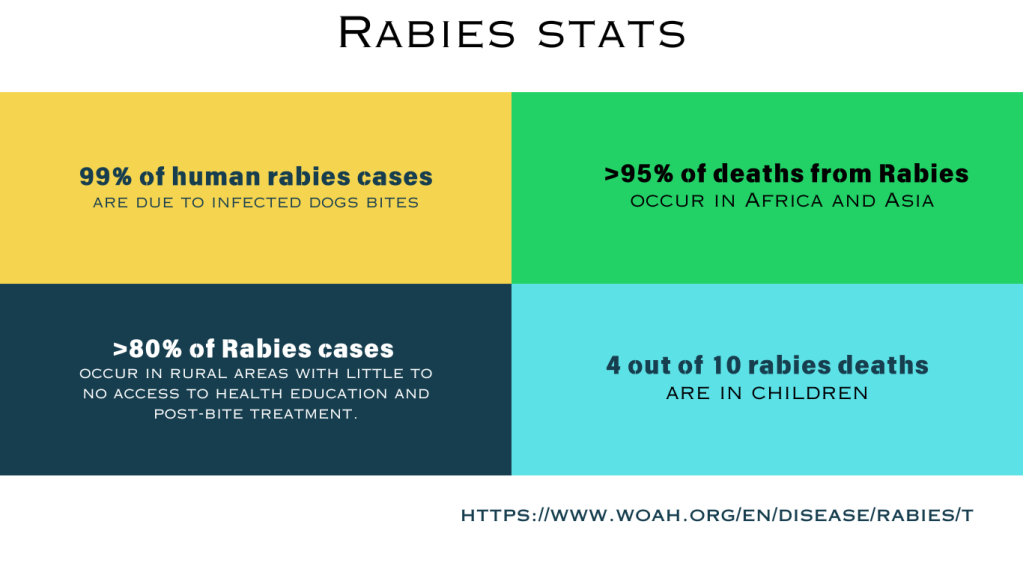
According to the World Organization for Animal Health (WOAH),
World Rabies Day is observed annually on September 28, and this year’s theme, “Breaking Rabies Boundaries,” encourages innovative thinking to overcome challenges in eliminating rabies. These challenges include gaps in international collaboration, limited access to essential resources like quality vaccines, and low public awareness.
The theme emphasizes that rabies is a transboundary disease requiring coordinated global action. Organizations like the Food and Agriculture Organization of the United Nations (FAO), the World Organization for Animal Health (WOAH), the World Health Organization (WHO), and the United Against Rabies Forum use a One Health approach to unite governments, vaccine producers, researchers, NGOs, and development partners to combat rabies.’
The theme encourages addressing any barrier in the fight against rabies by working together. This can be through vaccination campaigns, spreading messages on social media, collaborating with organizations, advocacy, raising awareness, or fundraising for rabies elimination.
Whatever action you take, your involvement will make a meaningful impact.


 farmalert.online
For questions Leave a Reply