
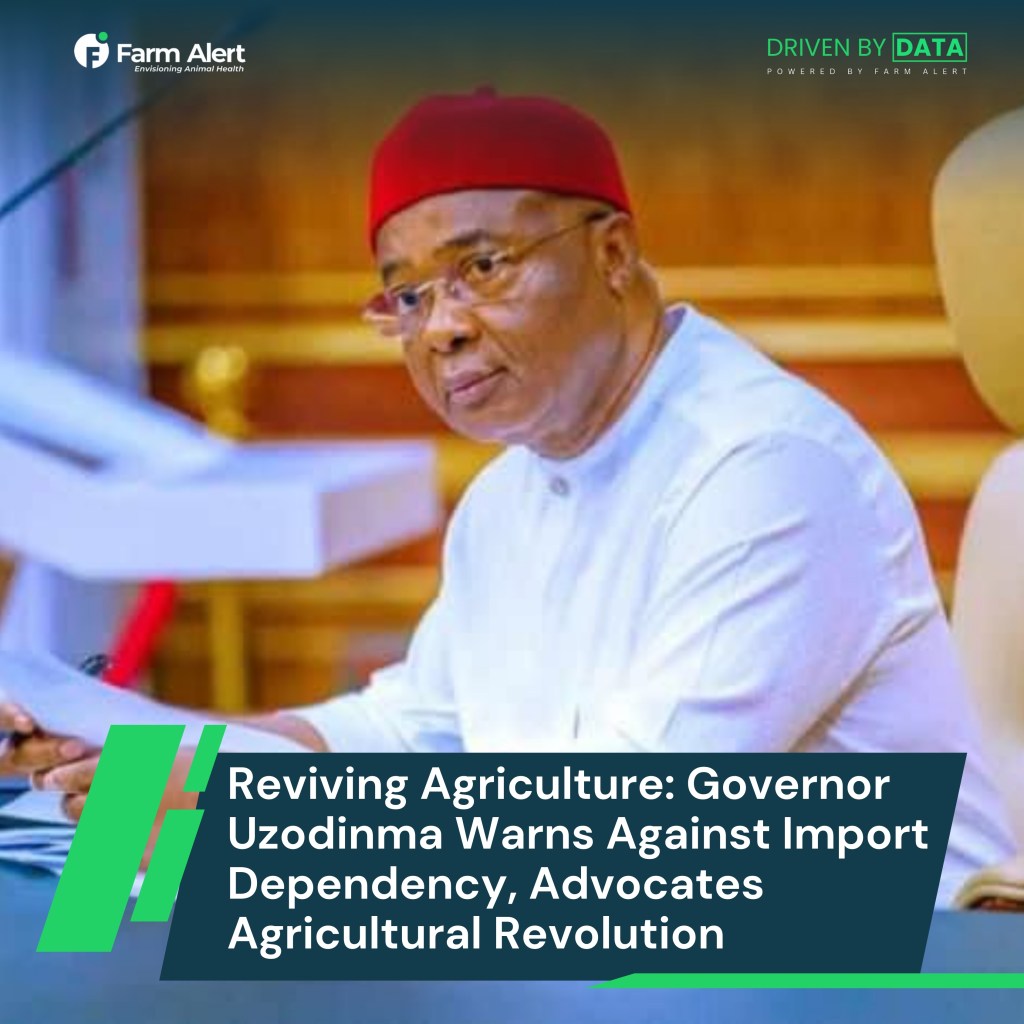
Governor Hope Uzodinma of Imo State has expressed concern over Nigeria’s growing reliance on imported goods and the neglect of its agricultural potential, warning that if drastic measures are not taken, even local staples like palm wine could one day be imported.
Speaking during a pre-convocation lecture at Michael Okpara University of Agriculture, Umudike, the Governor—represented by Professor Victor Nwachukwu, his Commissioner for Education—highlighted the urgent need for strategic investment in agriculture. He lamented the paradox of Nigeria’s fertile land and large population being insufficient to ensure food security and job creation, calling it a critical threat to the nation’s sovereignty.
“A nation that cannot feed itself cannot truly claim to be sovereign,” he remarked, emphasizing that agriculture is fundamental to economic resilience and national security.
From Agriculture to Oil: A Lost Opportunity
Governor Uzodinma attributed Nigeria’s food insecurity to the abandonment of agriculture after the discovery of crude oil. He described this shift as a misstep that disrupted the nation’s economic trajectory, turning Nigeria into a consumer economy heavily dependent on imports. “We orphaned agriculture when we adopted petro-dollars,” he lamented.
Drawing inspiration from late Michael Okpara’s Green Revolution, the Governor urged state leaders and regional organizations like Ohanaeze Ndigbo to revive agricultural practices, research, and funding. He emphasized the need for innovative approaches to preserve and improve traditional resources like local breeds of livestock, indigenous crops, and palm trees.
“If we don’t act decisively, Nigeria might one day import ‘ngwo’ (raffia palm) and ‘ugba’ (a local delicacy) from other countries,” he warned.
Universities as Catalysts for Agricultural Innovation
Governor Uzodinma called on universities of agriculture to lead the charge in research and development. He challenged academic institutions to move beyond theoretical knowledge and engage in practical farming activities while training farmers in innovative techniques.
“How many academic staff in our agricultural universities eat produce from their own farms?” he questioned, urging universities to develop technologies tailored to local farming needs and boost farmers’ productivity.
The Governor also advocated for agro-processing factories to add value to raw agricultural products, reducing the economic losses associated with exporting unprocessed produce and importing finished goods at exorbitant costs.
Learning from Global Examples
Governor Uzodinma pointed to Malaysia and Ukraine as models for agricultural success. He recalled how Malaysia, which once sourced palm fruits from Nigeria, has now become a global leader in palm oil production, with agriculture contributing significantly to its GDP. Similarly, he highlighted Ukraine’s continued dominance in wheat exportation despite years of conflict, contrasting it with Nigeria’s struggles in peacetime.
The Path Forward: A Call to Action
The Governor reiterated that prioritizing agriculture is the fastest route to addressing food insecurity, generating rural employment, reducing poverty, and achieving sustainable economic growth. He urged stakeholders—state governments, regional organizations, universities, and private investors—to collaborate in repositioning agriculture as the backbone of Nigeria’s economy.
“Nigeria’s success story will be written on the farms,” Uzodinma concluded, emphasizing the importance of harnessing the nation’s agricultural resources to secure its future.
This call for a green revolution resonates with Farm Alert’s mission to empower communities and transform agriculture in Africa, emphasizing the role of innovative solutions in achieving food security and economic prosperity.


 farmalert.online
For questions Leave a Reply