
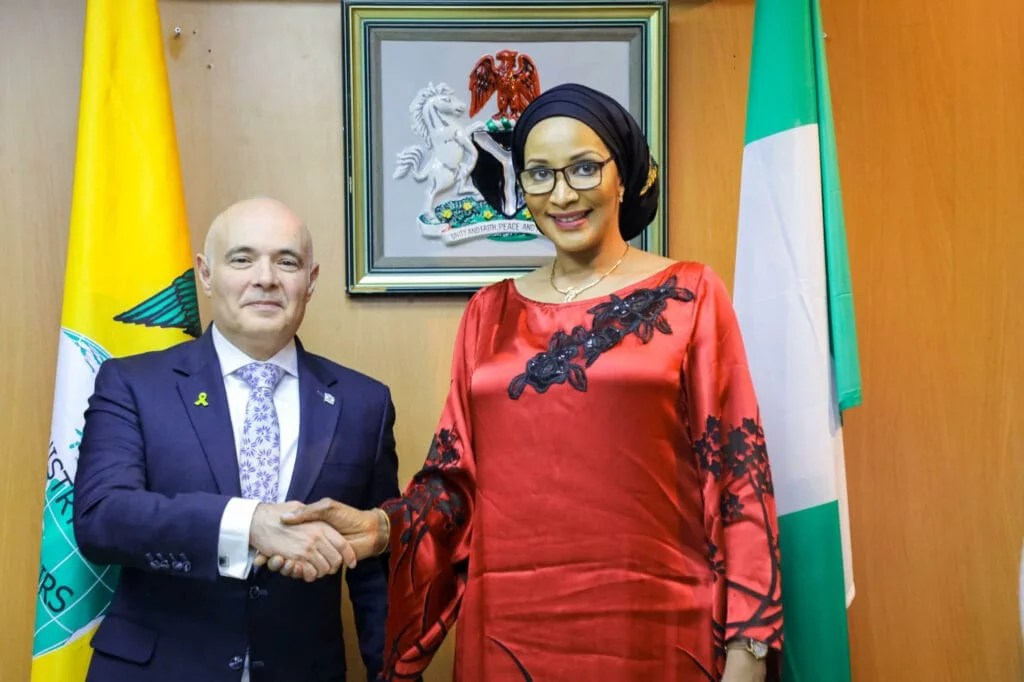
Nigeria and Israel are set to strengthen their bilateral ties through the establishment of a Joint Commission focused on enhancing food security, agricultural productivity, and technological exchange. This initiative was announced during a meeting between Nigeria’s Minister of State for Foreign Affairs, Ambassador Bianca Ojukwu, and Israel’s Ambassador to Nigeria, Michael Freeman.
Ambassador Ojukwu emphasized Nigeria’s interest in expanding its partnership with Israel beyond security and counter-terrorism, recognizing Israel’s global reputation for technological advancements. She noted that Nigeria is particularly keen on adopting Israeli agricultural innovations to transform local food production while also exploring collaborations in health, education, and entertainment.
The Joint Commission will serve as a platform to deepen trade relations, improve security cooperation, and facilitate the transfer of cutting-edge technology. Ambassador Freeman expressed Israel’s commitment to strengthening economic ties with Nigeria, particularly in agriculture, water resource management, education, and healthcare.
Given Nigeria’s ongoing struggles with food insecurity, this collaboration comes at a crucial time. Between 2020 and 2022, an estimated 21.3% of Nigerians experienced severe food shortages, while in 2022 alone, 12.8 million people faced acute hunger. Projections indicate that by 2025, up to 33 million Nigerians could suffer from food insecurity, highlighting the urgent need for intervention.
Despite its vast agricultural potential, Nigeria’s farming sector continues to face significant challenges, including outdated techniques, inefficient irrigation systems, and limited access to modern technology. Although agriculture contributed over 21% to the country’s GDP in the second quarter of 2023, the sector still struggles with productivity constraints. Nigeria has 34 million hectares of arable land and is a leading producer of crops like cassava, yam, sorghum, and palm oil. However, with over 36% of the Nigerian workforce engaged in agriculture, a lack of innovation has stifled the sector’s full potential.
The proposed Nigeria-Israel Joint Commission could be a game-changer in modernizing the country’s agricultural landscape. By leveraging Israel’s expertise in precision farming, smart irrigation, and post-harvest technology, Nigeria could significantly improve crop yields, reduce food waste, and enhance overall food security.
If properly implemented, this collaboration has the potential to revolutionize Nigeria’s agricultural sector, drive sustainable food production, and position the country as a leading agricultural powerhouse in Africa. The partnership marks a major step toward ensuring long-term food security and economic growth through innovation and technology.


 farmalert.online
For questions Leave a Reply