
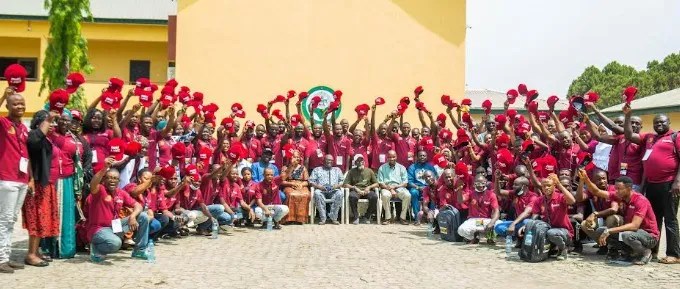
In a strategic move to boost livestock productivity and economic sustainability, the Kwara State Government, in partnership with the World Bank and the Centre for Dryland Agriculture (CDA) at Bayero University, Kano, recently concluded a five-day intensive training program on commercial fodder production and value chain optimization.
The workshop, held in Ilorin under the Livestock Productivity and Resilience Support Project (L-PRES), equipped 100 smallholder farmers with innovative techniques to convert agricultural residues into nutrient-rich animal feed. This initiative is expected to enhance feed availability, cut production costs, and improve overall livestock health and performance.
Transforming Agricultural Waste into High-Quality Feed
One of the participants, Ajala Khadija Idowu, a female smallholder farmer, praised the initiative, emphasizing how the training has enabled her to repurpose farm waste—such as maize and sorghum stalks—into high-quality animal feed. She highlighted the role of fodder choppers, crushers, and cutters in breaking down plant residues into digestible portions, as well as the silage-making process, which enhances feed digestibility and nutritional value.
Beyond fodder production, farmers were also trained in composting farm waste to create organic fertilizers, further promoting sustainable agricultural practices.
A Step Toward Reducing Open Grazing and Farmer-Herder Conflicts
A significant highlight of the training was the introduction of cultivated fodder from arable plants and grasses. This approach reduces the dependency on open grazing, which has been a major cause of conflicts between herders and crop farmers in Nigeria. By adopting this practice, farmers can ensure a steady supply of quality feed while fostering peaceful coexistence within agricultural communities.
Promoting Self-Reliance Among Farmers
Prince Olubunmi Isioye, a crop and livestock farmer from Offa Local Government Area, lauded the initiative, describing it as a game-changer for Nigeria’s agricultural sector. He stressed that the program equips farmers with practical skills to generate income independently rather than relying on government support.
“The economic situation is tough, but this initiative teaches us to be self-reliant. Instead of waiting for financial aid, we can now maximize farm resources to increase productivity and profitability,” he stated.
Addressing Climate Change and Future Food Security
Dr. Abdulhakeem Ajeigbe of the Centre for Dryland Agriculture at Bayero University, Kano, addressed the broader challenges facing agriculture, particularly the impact of climate change. He pointed out issues such as erratic rainfall, droughts, and pest outbreaks that threaten food production.
To sustain agricultural growth and meet the projected food demands of Nigeria’s expanding population—expected to reach 300 million in the next 25 years—Dr. Ajeigbe advocated for modernized, market-driven agriculture. He also emphasized the importance of irrigation farming and local manufacturing of essential fodder-processing machines to make them more accessible and affordable for farmers.
Government Commitment to Agricultural Growth
The Kwara State L-PRES Coordinator, Mr. Olusoji Oyawoye, commended Governor Abdulrahman Abdulrazaq for prioritizing agricultural development and empowering smallholder farmers. He urged participants to apply their newfound knowledge and extend the training to their communities to maximize its impact.
“As you return home, I encourage you to put your skills into practice and share your expertise with fellow farmers. Together, we can drive sustainable livestock production and transform the agricultural sector,” he stated.
Advancing Agriculture Through Innovation
This workshop is part of Kwara State’s broader effort to enhance food security, promote agribusiness, and support livestock farmers with sustainable solutions. By equipping farmers with advanced techniques in fodder production and waste-to-feed conversion, the state is paving the way for increased productivity, reduced costs, and a more resilient agricultural sector.


 farmalert.online
For questions Leave a Reply