
Did you know the fishing sector contributes more to Nigeria’s economy than the aviation industry?
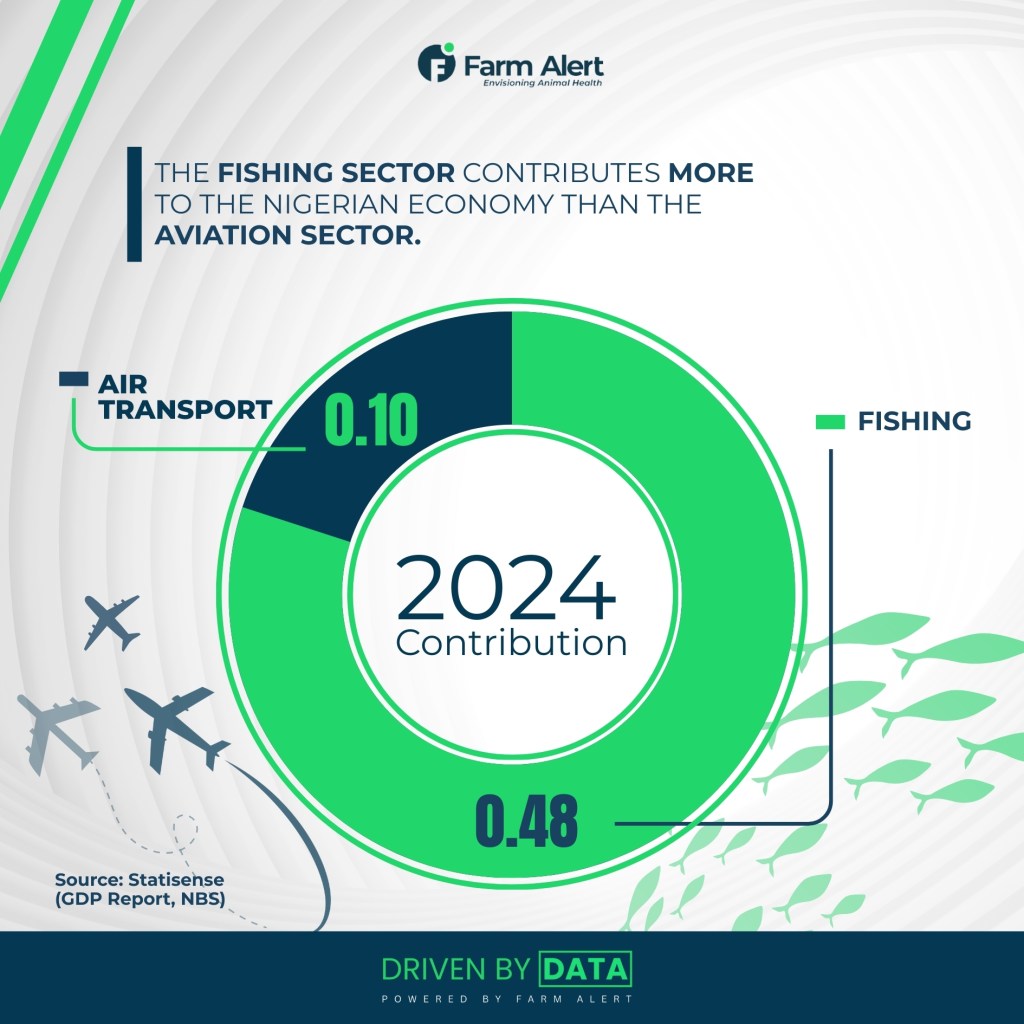
According to 2024 data, the fisheries sector in Nigeria contributed 0.48% to the national GDP—almost five times more than the air transport sector, which stood at just 0.10%. This surprising fact highlights the untapped potential of Nigeria’s blue economy, particularly the role of fisheries in driving sustainable development.
The Power of the Blue Economy
Nigeria is richly endowed with marine resources. With a coastline of 853 kilometers and an Exclusive Economic Zone (EEZ) extending 350 nautical miles, the country is perfectly positioned to lead in fisheries and aquaculture. Yet, the sector remains underutilized.
The fisheries industry in Nigeria provides direct employment to over 1.4 million people and serves as a vital source of protein for millions. It also supports rural livelihoods and contributes to food security. Small-scale artisanal fishing alone accounts for over 70% of local fish supply.
Despite these contributions, the sector faces major challenges—illegal fishing, environmental degradation, inconsistent policies, and lack of infrastructure. These issues limit the full realization of the economic potential of fisheries in Nigeria.
Why This Matters for Sustainable Development
Unlike the aviation sector, which is capital-intensive and urban-centered, the fisheries sector offers inclusive, grassroots-driven development. It supports rural economies, boosts nutritional outcomes, and can thrive with localized investments.
With innovations in aquaculture, mariculture, and marine biotechnology, the fisheries sector can scale sustainably—enhancing productivity without compromising ocean health. Add to that the growing interest in climate-smart seafood solutions, and you have a sector ripe for transformation.
What Can Be Done?
At Farm Alert, we believe the future of sustainable agriculture in Nigeria includes unlocking the blue economy. Strengthening policy frameworks, investing in data-driven fisheries management, and supporting community-based initiatives can turn the tide.
From fish farming training to tech-driven traceability systems, there’s so much room for innovation.
So here’s the question:
How can Nigeria truly maximize its fisheries sector for inclusive growth, food security, and long-term economic resilience?
Let us know your thoughts in the comments—and don’t forget to share this with someone who’s passionate about sustainable development in Nigeria.


 farmalert.online
For questions Leave a Reply