
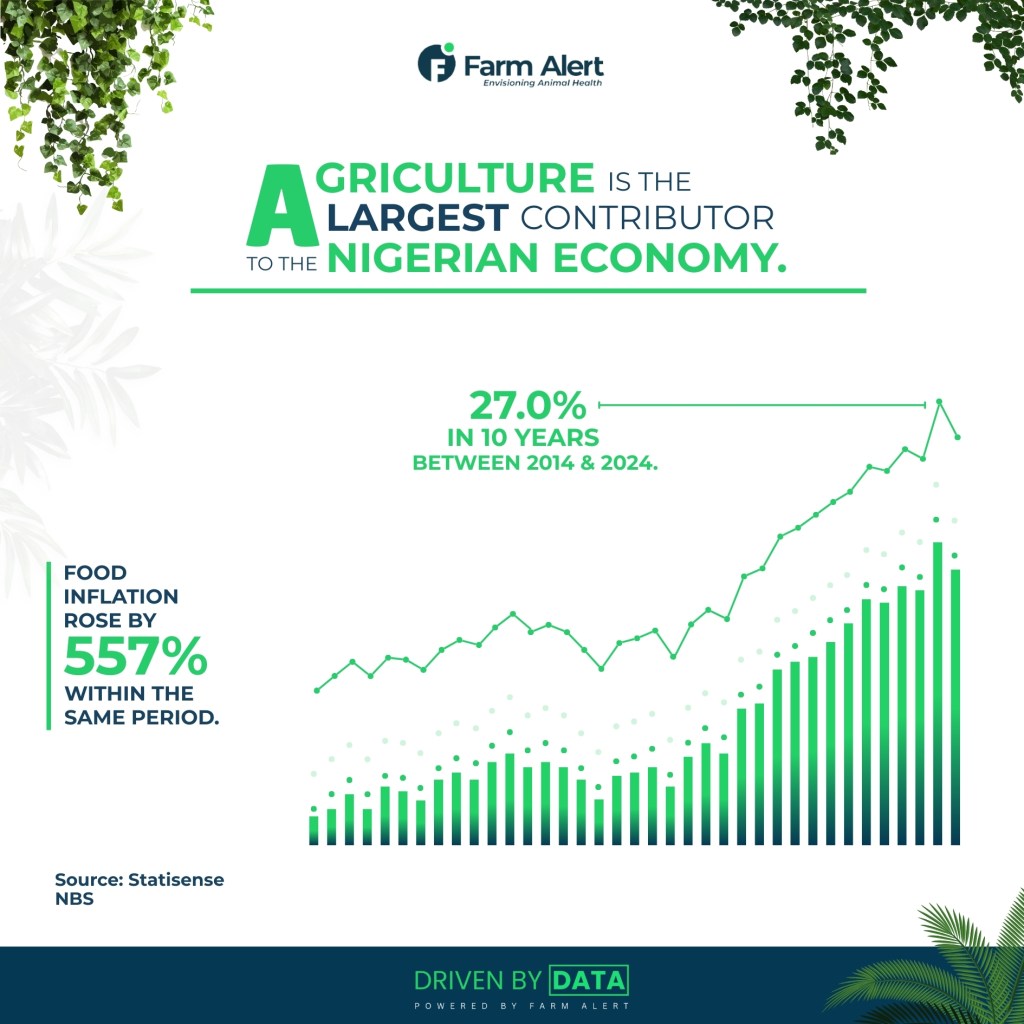
Between 2014 and 2024, Nigeria’s agricultural sector recorded a modest growth of 27%, reinforcing its position as the largest contributor to the nation’s economy. However, this progress is starkly overshadowed by an alarming 557% surge in food inflation within the same period.
While one might expect that agricultural growth would improve food availability and affordability, the reality has been quite the opposite for most Nigerians. Several intertwined factors—ranging from insecurity in key farming regions, poor infrastructure, and climate shocks, to the sharp depreciation of the naira—have severely disrupted food production and distribution. This has led to higher transport costs, extensive post-harvest losses, and increasing reliance on imported food, all of which have driven prices upward.
Data from recent years shows that food inflation is now at its highest in over two decades, with imported food items experiencing the fastest price increases due to foreign exchange volatility. At the same time, the actual share of agriculture in GDP has been on a decline, signaling deeper issues in the sector’s ability to meet domestic food demand.
While government interventions—such as grain releases from reserves and monetary tightening—have begun to slow the monthly inflation rate, affordability remains a pressing concern. As Nigeria continues to battle food insecurity, a more resilient, well-funded, and climate-smart agricultural system will be key to reversing this trend.


 farmalert.online
For questions Leave a Reply