
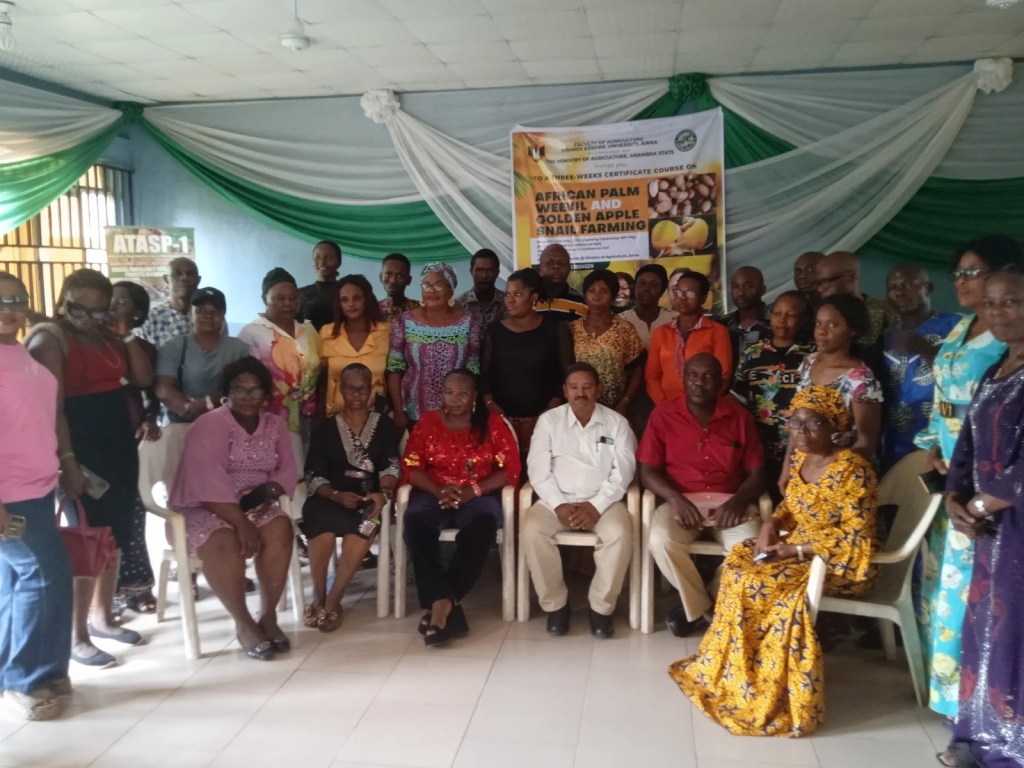
In a pioneering effort to promote alternative protein sources and sustainable farming practices, the Anambra State Government, in collaboration with the Faculty of Agriculture at Nnamdi Azikiwe University (UNIZIK), has kicked off a three-week intensive certification program focused on African Palm Weevil and Water Snail farming.
The program, officially inaugurated at the Ministry of Agriculture Conference Hall in Awka, is themed: “African Palm Weevil and Golden Snail Farming: Insects Business, Changing the World.” It attracted around 100 enthusiastic participants from across the state.
Transforming Agriculture Through Insect Farming
Dr. Forster Ihejiofor, the Anambra State Commissioner for Agriculture, who presided over the launch, emphasized that the initiative aims to equip participants with hands-on skills to explore the untapped economic value of insect-based farming systems, particularly micro-livestock like palm weevils and golden snails.
“Insect farming is a low-capital, high-yield opportunity that can significantly reduce protein deficiency and offer alternative income sources, especially for women and youth,” he explained. He also noted that these species are rich in high-quality protein and beneficial for both human consumption and animal feed formulation.
One of the program’s standout facilitators is Barr. Mandala Chandra Sekhar, an expert from India known for pioneering techniques in cultivating palm weevils using organic waste like dead palm cellulose. His presence brought an international perspective to the training, enhancing its technical depth.
From Backyard Farming to Big Business
The Commissioner highlighted that both African Palm Weevils and Golden Apple Snails can be raised with minimal space and resources. The goal is to turn local farmers into certified trainers and entrepreneurs, capable of scaling their operations and training others across their communities.
He added that replacing conventional fishmeal with palm weevil larvae and snails in animal feed could cut costs by 40–65%, providing a cost-effective and sustainable protein alternative for Nigeria’s feed industry.
Academic Backing and Nutritional Impact
Professor Cordelia Ebenebe, Dean of the Faculty of Agriculture at UNIZIK, echoed the Commissioner’s remarks, stressing the nutritional and economic potential of micro-livestock in addressing protein gaps in the country. She pointed out that rising prices of traditional livestock have limited access to animal protein, leading to widespread malnutrition and stunting in children.
“These insects are packed with essential amino acids, comparable to those found in conventional meat. They can easily be farmed in home environments, making animal protein more accessible and affordable for families,” she said.
Global Trends and Local Opportunities
Also speaking at the event, Mrs. Ifeyinwa Uzoka, Permanent Secretary of the Ministry of Agriculture, encouraged participants to align with global food innovation trends, where insect farming is gaining momentum—not just as a food source, but also in sectors like pharmaceuticals and value-added foods, including snacks, pasta, baked products, and beverages.
She urged participants to take full advantage of the unique training opportunity, which is expected to translate into better nutrition, job creation, and wealth generation across Anambra and beyond.
Commitment to Capacity Building
Lead trainer Barr. Mandala Chandra Sekhar expressed his excitement about contributing to agricultural transformation in Nigeria. He assured participants of a comprehensive, practical, and scalable curriculum that would prepare them to be change agents in their communities.
Participants will receive certificates at the end of the training, positioning them as pioneers in a growing insect farming ecosystem that holds promise for both economic resilience and food system sustainability.
Why This Matters for Nigeria:
This initiative reflects a broader shift towards climate-smart agriculture, where alternative protein farming like insect rearing can tackle challenges such as rising feed costs, malnutrition, and youth unemployment, while contributing to sustainable development goals (SDGs).


 farmalert.online
For questions Leave a Reply