
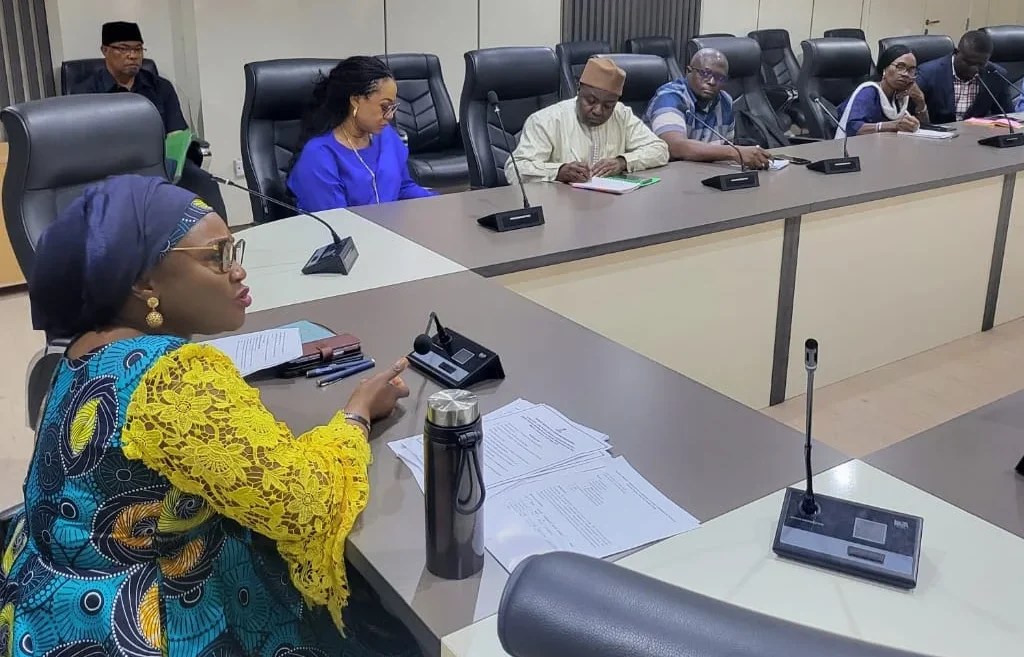
In a proactive step toward sustainable agricultural development, the Federal Ministry of Livestock Development has inaugurated a Technical Working Group (TWG) on Climate Change, aiming to integrate climate-smart strategies into Nigeria’s livestock sector.
The inauguration ceremony, held in Abuja on Thursday, was led by Dr. Ijeoma Akujobi, the ministry’s Permanent Secretary, who represented Minister Alhaji Mukhtar Idi Maiha. Dr. Akujobi emphasized the urgency of the initiative, describing the TWG’s formation as both “essential and timely” in addressing climate threats to animal agriculture.
Mainstreaming Climate Action in Livestock Systems
The TWG is tasked with ensuring that climate considerations are embedded in all livestock policies, programs, and projects. The group was initially made up of 14 departmental representatives from the ministry, but now includes Mr. Richard Mark, Special Adviser to the Minister, and Muna Racheal, a communications expert.
The Nigeria Livestock Growth Acceleration Strategy (NL-GAS) 2025–2030 will serve as the ministry’s roadmap for driving sector-wide resilience, with climate adaptation and mitigation measures built into its framework.
Dr. Akujobi urged the TWG to engage with key institutions such as the National Council on Climate Change Secretariat (NCCCS) and the Federal Ministry of Environment, and to pursue international climate funding, including carbon credit programs.
She also called on the team to document knowledge-sharing activities, encouraging them to submit back-to-office reports and spread insights across the ministry for long-term institutional learning.
Pioneering Climate Leadership in Agriculture
Speaking on behalf of the group, Dr. Ishiyaku Mohammed, Director of Sanitary Mandate and Climate Change, highlighted the ministry’s leadership in being the first to establish a climate-focused working group among Nigeria’s Ministries, Departments, and Agencies (MDAs).
He confirmed that international development partners, including GIZ’s LIVeSYS project and the Stockholm Environment Institute (SEI), have expressed strong interest in offering technical assistance to support the TWG’s operations.
“Africa contributes the least to greenhouse gas emissions but suffers the most from its impacts,” Dr. Mohammed said. “We intend to leverage carbon financing, particularly through private-sector collaboration, to strengthen our livestock systems.”
Building for a Climate-Resilient Future
To ensure transparency and impact measurement, a Measurement, Reporting, and Verification (MRV) system will be developed, based on a ministry-led baseline survey. Funding for the MRV framework has already been approved.
The TWG also played a key role in embedding livestock priorities into Nigeria’s Nationally Determined Contributions (NDCs)—a reflection of the sector’s growing relevance in national climate discourse.
Dr. Mohammed addressed the delay in implementing Nigeria’s carbon credit policy, attributing it to the pending presidential council meeting needed for ratification. He expressed optimism that once convened, the carbon market framework will unlock new climate finance pathways for livestock actors.
The event concluded with each TWG member pledging personal commitment to climate-smart transformation in Nigeria’s livestock industry.


 farmalert.online
For questions Leave a Reply