
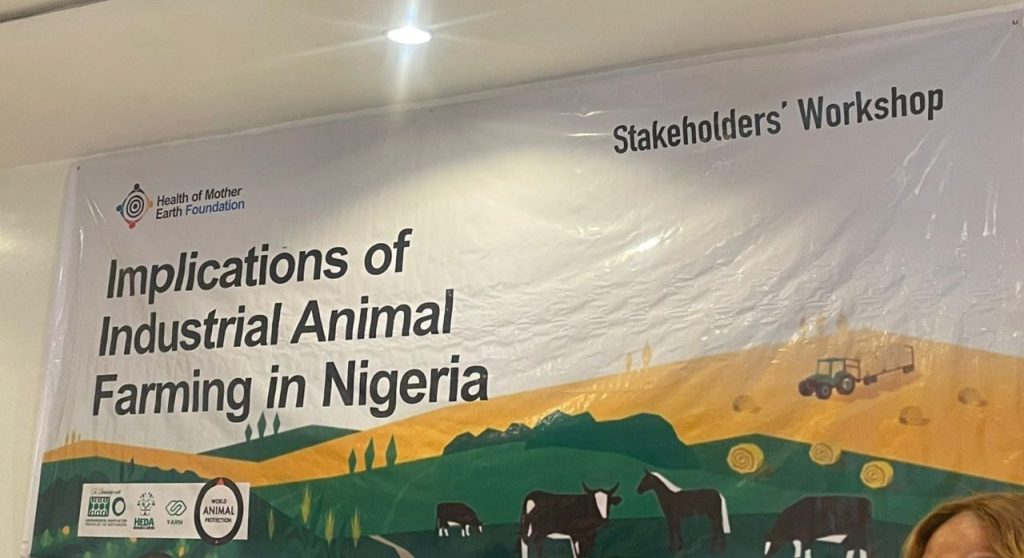
Nigeria’s push towards large-scale, industrial animal farming has sparked growing debate among agricultural, environmental, and public health experts, with many urging the government to tread cautiously.
At the center of the controversy is JBS, the world’s largest meat processing company, which has unveiled plans to invest $2.5 billion in Nigeria to establish six large-scale meat processing facilities across states such as Niger, Kaduna, Benue, Nasarawa, and Ogun. While government officials argue the investment will boost food security, create jobs, and attract foreign exchange, stakeholders warn of serious long-term risks.
Public Health Concerns
Experts fear that industrial livestock systems rely heavily on antibiotics to accelerate animal growth and prevent disease in confined environments. According to Joyce Brown, Director of Programmes at Health of Mother Earth Foundation, unchecked antibiotic use in farming could accelerate antimicrobial resistance (AMR), weakening the effectiveness of vital medicines for humans.
She cautioned that Nigerians could face health risks from consuming meat contaminated with antibiotic residues, stressing that “food insecurity should not be solved at the expense of human health.”
Environmental & Land Use Risks
Critics also highlight the environmental costs of factory farming. From water contamination and excessive chemical use to large-scale land displacement, the consequences could be far-reaching. For instance, Niger State has already allocated over 1.2 million hectares of land for industrial animal farming — a move that threatens smallholder farmers and pastoralists who depend on this land for survival.
Maryanne Bassey-Olsson, Deputy Executive Director of Environmental Rights Action/Friends of the Earth Nigeria, noted JBS’s controversial global track record, pointing to environmental degradation and human rights issues in other countries. She emphasized that many of the jobs created are often low-wage, while managerial positions go to outsiders, leaving local communities economically sidelined.
Climate Change Impact
Industrial meat production is also a major contributor to greenhouse gas emissions. Tennyson Williams, Africa Director for World Animal Protection, revealed that JBS alone generated 421 million tonnes of carbon emissions in 2021 — more than the annual emissions of entire nations like Italy. He warned Nigeria against repeating the mistakes of the oil sector, where foreign investment came at the expense of communities and the environment.
Call for Due Diligence & Alternatives
Stakeholders unanimously called for the Nigerian government to:
- Conduct thorough Environmental and Social Impact Assessments (ESIAs) before approving projects.
- Involve local farmers and communities in decision-making.
- Prioritize smallholder farming and agroecology over industrial, export-driven models.
- Demand accountability and transparency from multinational corporations.
As Brown concluded, industrial livestock expansion may appear attractive on the surface, but the hidden costs to public health, local livelihoods, and the environment could outweigh the benefits. Nigeria now faces a critical decision: whether to embrace factory farming, or strengthen sustainable food systems that protect people, animals, and ecosystems.


 farmalert.online
For questions Leave a Reply