
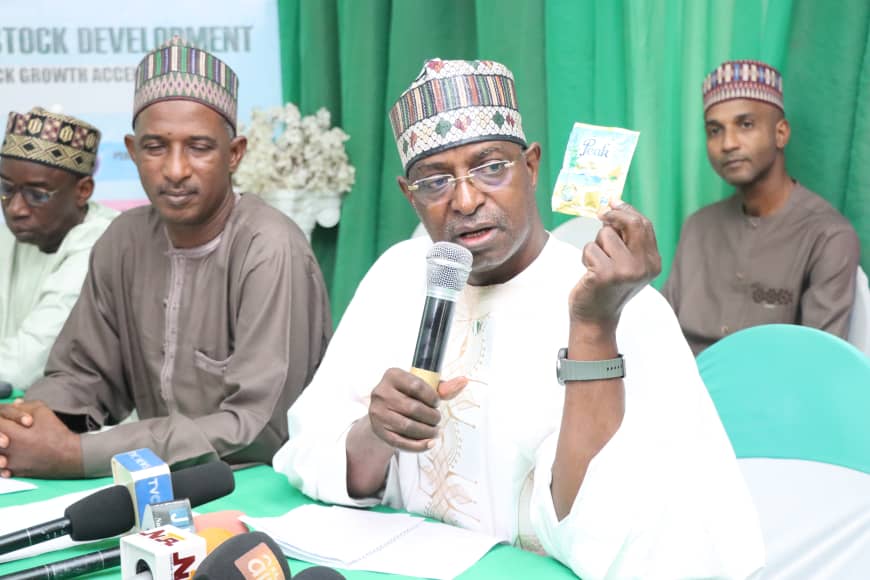
The Federal Ministry of Livestock Development (FMLD) has reaffirmed its determination to phase out open grazing in Nigeria’s capital by fast-tracking the development of three designated grazing reserves in Abuja. The initiative is expected to serve as a model for nationwide adoption.
Speaking at the 2025 Media Retreat on Livestock Reporting in Kaduna, the Honourable Minister of Livestock Development, Idi Mukhtar Maiha, said the plan is now moving from policy design to implementation.
“All animals roaming the city centres will be relocated to designated reserves,” the Minister assured. “By resuscitating grazing reserves, we aim to reduce open grazing, improve productivity, and minimise conflicts between farmers and herders. Our countryside should have milk trucks, not armoured vehicles; milking machines should replace machine guns.”
The development forms part of the National Livestock Growth Acceleration Strategy (NL-GAS), designed to drive peace, food security, and rural prosperity across the country.
Strengthening Communication and Partnerships
Welcoming participants, the Ministry’s Permanent Secretary, Dr. Chinyere Ijeoma Akujobi, represented by Victor Egbon, Director of Ruminants and Monogastric Development, stressed the importance of strategic communication in promoting livestock policies and shaping public perception.
She expressed optimism that the retreat would strengthen partnerships with the media, enhance journalists’ reporting skills, and highlight opportunities within the livestock sector.
Expert Sessions and Media Engagement
The retreat featured in-depth presentations from media and sector experts.
- Dr. Cletus Akwaya, former Group Managing Director of LEADERSHIP Group and Publisher of Daily Asset, delivered a lecture on ethical and investigative livestock reporting. He urged journalists to look beyond “episodic coverage of farmer-herder clashes” and instead focus on opportunities, innovations, and economic potential within the industry.
- Peter Dama, a development communication specialist, highlighted the importance of contextual and culturally sensitive reporting, urging media practitioners to frame livestock stories in ways that resonate with both rural and urban communities.
- Dr. Ishaq Bello explained the economic significance of the livestock value chain to Nigeria’s GDP, while pointing out persistent challenges such as poor infrastructure, policy gaps, and low adoption of modern practices.
- Technology expert Oluseun Taylor showcased the role of digital tools in agricultural journalism, demonstrating how data visualization, multimedia storytelling, and social media platforms can amplify livestock issues, bridge gaps between policymakers and citizens, and support advocacy.
Field Visit and Practical Insights
The retreat also included a field excursion to Zaidi Farms, where participants engaged firsthand with livestock infrastructure and farm operations. The visit provided deeper insights into the realities, opportunities, and constraints within Nigeria’s livestock sector.
A Call for Sustainable Action
By reaffirming its commitment to grazing reserve development, the FMLD has signaled a decisive move towards ending open grazing in Abuja. With strengthened partnerships between government, journalists, and stakeholders, the livestock sector is poised to play a greater role in conflict reduction, productivity improvement, and food security enhancement across Nigeria.


 farmalert.online
For questions Leave a Reply