
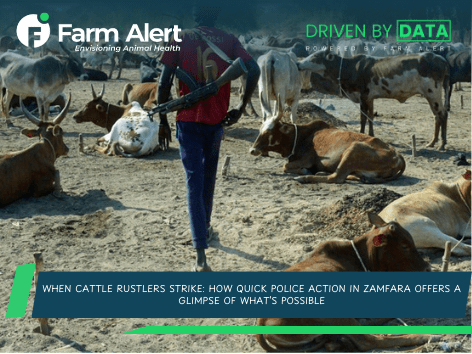
On February 27, 2026, the quiet early hours in Damba, a community in Zamfara State, were disrupted by an attempted cattle rustling attack. Armed men reportedly invaded the Sunami area of Damba with the intention of stealing a large number of cattle. This time, however, the operation did not succeed.
Through swift and coordinated police action, the suspects were forced to abandon their mission. All stolen cattle were recovered and returned to their rightful owners. While this may appear to be a routine security update, the incident reflects a much deeper and long-standing challenge affecting Nigeria’s rural economy and food systems.
The Damba Incident: Rapid Response and Community Collaboration
According to DSP Yazid Abubakar, Police Public Relations Officer of the Zamfara State Police Command, the attack was intercepted following credible information from a local resident. That early warning proved critical.
Key elements of the successful response included:
• A timely tip-off from a vigilant community member
• Immediate mobilisation by the Divisional Police Officer and the search and rescue team
• Active pursuit of the suspects, leading to recovery of the cattle
• Safe return of all livestock to the owners
Commissioner of Police Ibrahim Balarabe Maikaba commended the officers involved for their professionalism and bravery. He also urged continued cooperation between residents and security agencies.
The incident demonstrates how community trust and proactive policing can prevent economic loss and restore confidence in rural areas.
Cattle Rustling in Nigeria: More Than a Property Crime
Cattle rustling in Nigeria has evolved far beyond simple livestock theft. In many parts of the country, particularly in the northwest, it is closely linked to banditry and organised criminal networks.
Its impact stretches across several dimensions:
Rural Livelihoods
For pastoralists and livestock farmers, cattle represent savings, income, and generational wealth. Losing livestock can mean financial collapse.
Food Security
Reduced herd sizes disrupt meat supply chains and contribute to price instability in local markets.
Social Stability
Rustling often triggers retaliatory violence between communities, worsening tensions and deepening mistrust.
National Security
In states like Zamfara, Katsina, and Sokoto, cattle rustling is frequently associated with armed bandit groups operating with sophisticated weapons.
Previous Incidents That Highlight the Pattern
The Damba case is not isolated. Over the past several years, numerous incidents across northern Nigeria have underscored the scale of the problem.
Katsina State
Repeated large-scale raids have resulted in hundreds of cattle stolen in single operations. Some attacks have involved killings and abductions of herders.
Sokoto and Zamfara States
Communities have reported coordinated night raids by bandit groups targeting multiple settlements in a single operation.
Kaduna State
Security agencies have uncovered rustling networks operating across state borders, moving stolen cattle through illegal trade routes.
Benue and Taraba States
Although often framed as farmer herder conflicts, several violent outbreaks were reportedly triggered by allegations of cattle theft.
These cases show that rustling is not random. It is part of a wider security ecosystem involving mobility, weapons access, and organised criminality.
Why the Problem Persists
Several structural factors contribute to the persistence of cattle rustling:
• Proliferation of small arms
• Limited rural security infrastructure
• Difficult terrain that enables escape
• Economic hardship and unemployment
• Weak livestock tracking systems
Addressing rustling requires more than reactive policing. It demands preventive systems, technology integration, and rural investment.
Why the Damba Success Matters
The Zamfara Police operation offers practical lessons:
Early Warning Systems Work
Community reporting can significantly improve response time.
Rapid Deployment Is Critical
Quick mobilisation prevented the suspects from escaping with the livestock.
Recovery Builds Confidence
Returning stolen cattle helps restore trust between communities and security agencies.
Public Collaboration Is Essential
Security agencies cannot operate effectively without local cooperation.
While one successful intervention does not eliminate the broader challenge, it demonstrates that structured response mechanisms can yield results.
The Way Forward
To build on successes like the Damba operation, stakeholders may consider:
- Expanding rural intelligence networks
- Strengthening rapid response capabilities
- Introducing livestock identification and tracking systems
- Increasing patrol presence in high risk zones
- Enhancing inter state security coordination
Sustained improvements in rural security would not only protect livelihoods but also support Nigeria’s broader food security and agricultural transformation goals.
Conclusion
The foiling of the cattle rustling attack in Damba represents more than a local policing success. It highlights the power of vigilance, rapid response, and community partnership.
Cattle rustling remains a serious threat to rural stability, agricultural productivity, and food systems across parts of Nigeria. However, coordinated action between citizens and security agencies offers a pathway toward reducing its impact.
If replicated consistently, such interventions could gradually shift the narrative from persistent vulnerability to increasing resilience in Nigeria’s livestock producing communities.


 farmalert.online
For questions Leave a Reply