
Bird Flu Is No Longer Just a Poultry Problem: Why Veterinarians Are Watching More Closely Than Ever
For decades, bird flu was largely viewed as a disease of poultry farms; devastating for farmers, certainly, but largely contained within bird populations. Today, that perception is rapidly changing. Across multiple continents, veterinarians and animal health authorities are observing a troubling shift: the virus responsible for avian influenza is increasingly appearing in species beyond birds, raising new concerns for animal health systems worldwide.
What was once a primarily agricultural problem is now emerging as a broader veterinary and ecological challenge.
A Virus With a Long History in Birds
Avian influenza is caused by influenza A viruses that naturally circulate among wild birds. While many strains cause little harm to their hosts, highly pathogenic forms—particularly the H5 strains—can spread rapidly through poultry populations, leading to severe outbreaks and large-scale culling operations.
Organizations such as the World Organisation for Animal Health and the Food and Agriculture Organization have spent years strengthening global surveillance systems to detect outbreaks early and limit their spread.
But in recent years, something unusual has begun to happen.
The Alarming Shift: Spillover Into Mammals
Veterinary researchers have increasingly documented avian influenza infections in mammals—a development that has raised alarms among disease experts.
Cases have been recorded in animals such as:
- foxes
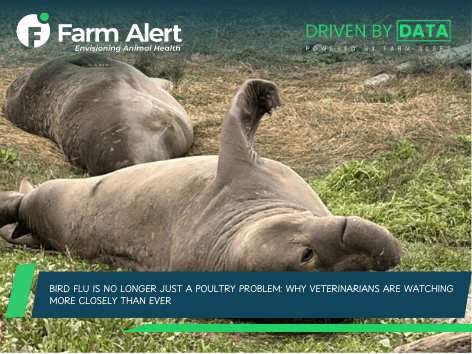
- seals
- sea lions
- mink
- domestic cats
- and even cattle in isolated incidents.
These spillover events occur when mammals come into contact with infected birds or contaminated environments. In some situations, the virus adapts enough to replicate inside mammalian hosts.
For veterinarians and epidemiologists, this is a critical warning sign.
The more frequently a virus infects different species, the greater the opportunity it has to mutate and adapt, potentially changing how it spreads.
Why Cross-Species Transmission Matters
From a veterinary perspective, the concern is not only about poultry losses, it is about virus evolution.
Every infection in a new host species creates an opportunity for genetic changes. These mutations may affect how the virus behaves, including:
- how efficiently it spreads
- which species it can infect
- how severe the disease becomes.
This is why veterinarians often view animal disease outbreaks through the lens of One Health, an approach that recognizes the close connections between animal health, human health, and environmental systems.
The World Health Organization has repeatedly emphasized that monitoring diseases in animals is one of the most effective ways to detect emerging public health threats before they spread widely.
The Expanding Role of Veterinary Surveillance
As avian influenza evolves, the responsibilities of veterinary professionals are expanding far beyond traditional farm management.
Veterinary surveillance now includes:
- monitoring wildlife populations
- tracking disease movement across ecosystems
- analyzing viral genetics in laboratories
- coordinating international disease reporting systems.
Institutions such as the World Organisation for Animal Health coordinate data from dozens of countries, allowing veterinarians to identify emerging patterns and respond more quickly to outbreaks.
This global network of veterinary intelligence has become one of the most important tools for managing transboundary animal diseases.
Poultry Still Faces the Immediate Impact
While the broader implications of avian influenza are drawing attention, poultry production continues to bear the most direct economic consequences.
Outbreaks can lead to:
- the culling of millions of birds
- severe disruptions to egg and poultry meat supply
- major financial losses for farmers and agribusinesses.
In many countries, bird flu outbreaks have triggered temporary trade restrictions, affecting international poultry markets and food supply chains.
A New Era for Veterinary Medicine
The growing complexity of diseases like avian influenza is transforming the role of veterinarians globally.
Veterinary medicine is no longer confined to animal treatment alone. It now sits at the intersection of:
- agriculture
- wildlife conservation
- epidemiology
- global health security.
In this new landscape, veterinarians are increasingly acting as frontline defenders against emerging diseases that could affect both animals and humans.
The Bigger Picture
Bird flu’s expanding reach serves as a reminder that disease dynamics are constantly evolving. As ecosystems change, wildlife interactions increase, and global trade intensifies, pathogens are finding new pathways to move between species and across borders.
For the veterinary profession, this means vigilance is more important than ever.
The story of avian influenza is no longer simply about poultry farms, it is about how interconnected animal and human health systems have become.
And in that interconnected world, veterinarians are playing a role that is more critical than many people realize.


 farmalert.online
For questions Leave a Reply