
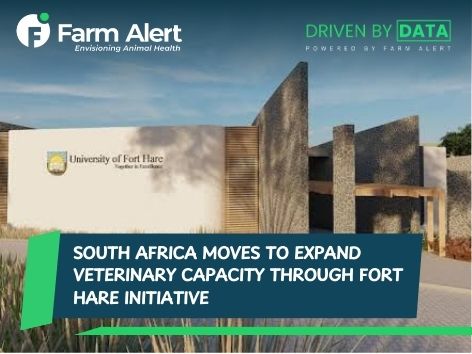
Across Africa, the demand for stronger veterinary systems is growing rapidly. Livestock populations are expanding, animal diseases continue to threaten food systems, and the need for trained veterinary professionals is increasing. Against this backdrop, South Africa is taking steps to strengthen its veterinary education infrastructure through plans to establish a veterinary teaching hospital at the University of Fort Hare.
If completed, the project would represent an important development for veterinary training and animal health services in South Africa. It would also help address longstanding concerns about the country’s limited veterinary training capacity and the uneven distribution of veterinary services across provinces.
Veterinary Training Capacity in South Africa
South Africa currently relies heavily on a single institution for veterinary training. The University of Pretoria hosts the country’s primary veterinary training centre through its Faculty of Veterinary Science, University of Pretoria located in Onderstepoort. For decades, this faculty has served as the main pipeline for veterinary professionals entering the country’s livestock, wildlife, and companion animal sectors.
While the institution has maintained a strong reputation for veterinary education, relying on a single training centre creates limitations. The number of veterinarians graduating each year remains relatively small compared with the growing demand for veterinary services. This shortage is particularly evident in rural regions where livestock farming is widespread but veterinary access is limited.
Expanding veterinary training infrastructure has therefore become a strategic priority for strengthening animal health systems in the country.
The Proposed Veterinary Teaching Hospital at Fort Hare
The proposed veterinary hospital at the University of Fort Hare is expected to function as both a clinical training facility and a regional animal health service centre. Teaching hospitals are a core component of veterinary education because they allow students to gain hands on clinical experience under professional supervision.
Such facilities typically provide a wide range of services including livestock disease diagnosis, surgical procedures, laboratory testing, and extension services for farmers. They also serve as research hubs where scientists study emerging animal diseases and livestock management challenges.
Government authorities, including the Department of Agriculture, Land Reform and Rural Development, have expressed support for strengthening veterinary infrastructure. Expanding veterinary teaching capacity is seen as a way to improve national disease surveillance, enhance livestock productivity, and increase the availability of veterinary services in underserved regions.
The Importance of the Eastern Cape Livestock Economy
The location of the proposed veterinary hospital is particularly significant. The Eastern Cape is one of South Africa’s most important livestock producing regions. The province hosts large populations of cattle, sheep, and goats that support thousands of rural households.
Communal livestock farming systems are common in this region. Many farmers depend on animals for income, food security, and cultural purposes. However, access to veterinary services remains uneven. Limited diagnostic infrastructure and shortages of veterinary professionals can make it difficult to detect and manage animal diseases quickly.
Establishing a veterinary teaching hospital within the region could significantly strengthen the local animal health system. Farmers would gain improved access to clinical services while veterinary students would receive practical training in real livestock production environments.
Disease Surveillance and Animal Health Challenges
Livestock diseases remain a persistent challenge in several parts of South Africa. Diseases such as Foot and Mouth Disease and Brucellosis continue to affect cattle populations and can have serious economic consequences for farmers and national livestock industries.
Veterinary teaching hospitals play an important role in identifying and controlling such diseases. They provide diagnostic laboratories, conduct epidemiological research, and train veterinarians who later work in both private and public animal health services.
Strengthening veterinary infrastructure therefore contributes directly to national disease preparedness and biosecurity.
Addressing the Veterinary Workforce Gap
Many countries in Africa face shortages of trained veterinarians. The demand for veterinary professionals is rising as livestock sectors expand and governments place greater emphasis on food safety, zoonotic disease control, and animal welfare.
South Africa has made progress in building a strong veterinary profession, yet the number of veterinarians available to serve rural livestock communities remains limited. Expanding veterinary education capacity through institutions such as the University of Fort Hare could help close this gap.
Increasing the number of training institutions also diversifies veterinary expertise and strengthens research capacity across the country.
Broader Implications for Food Security and Public Health
Veterinary systems play a critical role beyond animal treatment. Healthy livestock populations are essential for food security, rural income generation, and the prevention of zoonotic diseases that can spread from animals to humans.
International organizations including the Food and Agriculture Organization and the World Organisation for Animal Health emphasize that strong veterinary education systems are foundational to resilient livestock economies.
By improving veterinary training infrastructure, countries can enhance their ability to detect animal diseases early, respond to outbreaks effectively, and protect both livestock industries and public health.
Looking Ahead
The proposed veterinary teaching hospital at the University of Fort Hare represents more than an infrastructure project. It reflects a broader recognition that veterinary capacity is essential for sustainable agricultural development.
As livestock sectors across Africa continue to grow, investments in veterinary education, research, and clinical infrastructure will become increasingly important. Expanding veterinary training institutions can help ensure that future generations of veterinarians are equipped to manage the complex animal health challenges shaping modern livestock systems.
For South Africa, strengthening veterinary education through initiatives such as the Fort Hare veterinary hospital could play a key role in supporting livestock productivity, improving rural veterinary services, and reinforcing national animal health security.


 farmalert.online
For questions Leave a Reply