
Nigeria is taking a strategic step toward transforming its livestock industry, signaling a shift from domestic reform to international collaboration.
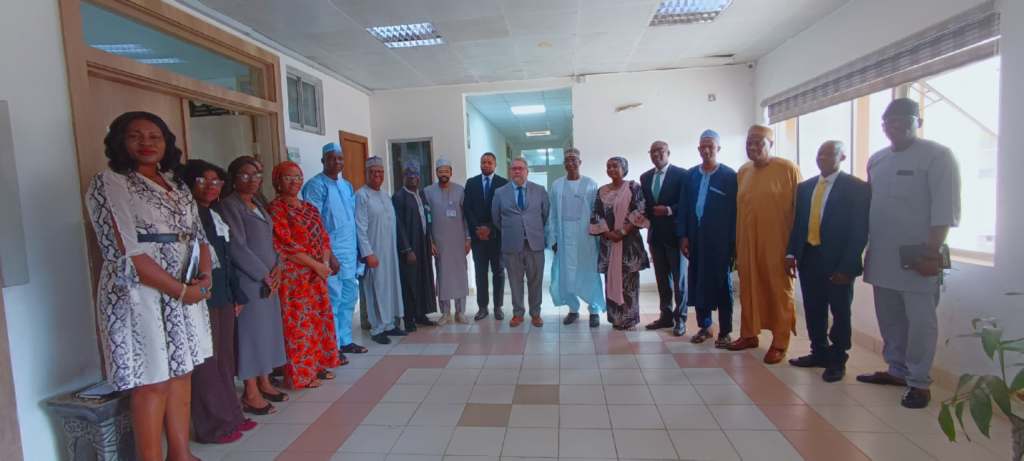
On March 16, 2026, the Honourable Minister of Livestock Development, Idi Mukhtar Maiha, received Argentina’s Ambassador to Nigeria, Nicolás Perazzo María Naón, in Abuja to discuss deepening bilateral cooperation in livestock development.
The meeting marks a growing recognition that Nigeria’s livestock transformation ambitions will require not only policy reforms at home, but also technical partnerships with countries that have achieved global success in animal agriculture.
A Strategic Partnership with a Global Livestock Powerhouse
Argentina is widely regarded as one of the world’s leading livestock producers. The country consistently ranks among the top exporters of beef globally, producing close to 3 million tonnes of beef annually, alongside significant output in pork and poultry.
For Nigeria, this presents a clear opportunity.
By engaging with a country that has built a globally competitive livestock sector, Nigeria is positioning itself to learn from established systems in:
- large-scale ranching
- animal genetics and breeding
- feedlot management
- meat processing and export systems
The proposed collaboration, expected to be formalized through a Memorandum of Understanding, aims to facilitate knowledge transfer and technical cooperation between both countries.
The Bigger Context: Nigeria’s Livestock Reform Agenda
The engagement with Argentina comes at a critical moment for Nigeria’s livestock sector.
The recent establishment of the Federal Ministry of Livestock Development reflects a broader policy shift toward treating livestock as a strategic economic sector rather than a subsistence activity.
Nigeria currently faces several structural challenges:
- heavy reliance on extensive open grazing systems
- low productivity per animal
- high vulnerability to disease outbreaks
- limited integration into global meat markets
At the same time, demand for animal protein continues to rise, driven by population growth and urbanization.
The government’s reform agenda is therefore focused on:
- transitioning to sedentary and ranch-based systems
- improving productivity through better inputs and management
- attracting private sector investment
- strengthening value chains from production to processing
Why Argentina Matters in This Transition
Argentina’s livestock model offers practical insights for Nigeria’s transition.
Unlike traditional extensive systems, Argentina has developed:
- efficient pasture-based and feedlot systems
- strong veterinary and animal health frameworks
- advanced meat processing and export infrastructure
These systems allow the country to produce high-quality meat at scale while maintaining global competitiveness.
For Nigeria, adapting elements of this model could:
- increase meat production efficiency
- reduce pressure on land and grazing routes
- improve disease control through more structured systems
- open pathways to regional and international markets
Beyond Production: The Role of Veterinary Systems
While much of the discussion focuses on production, the success of Argentina’s livestock sector is also underpinned by strong veterinary systems.
Effective disease surveillance, vaccination programmes, and biosecurity measures are essential components of any modern livestock industry.
For Nigeria, strengthening veterinary capacity will be critical to ensuring that increased production does not lead to increased disease risk.
Collaboration with Argentina could therefore extend beyond production techniques to include:
- veterinary training and capacity building
- disease monitoring systems
- livestock health management practices
A Shift Toward Global Competitiveness
The partnership reflects a broader ambition to position Nigeria’s livestock sector within the global market.
Currently, Nigeria imports a significant portion of its meat consumption, despite having one of the largest livestock populations in Africa.
Improving productivity and efficiency could help:
- reduce import dependence
- increase domestic supply
- create jobs across the value chain
- improve food security
In the long term, it could also enable Nigeria to participate more actively in regional and international livestock trade.
Strengthening Bilateral Relations Through Agriculture
The meeting also highlights the strengthening of diplomatic and economic ties between Nigeria and Argentina.
Relations between both countries date back to 1963 and have expanded over the decades to include cooperation on international issues and economic development.
Livestock development now appears to be emerging as a new focal point for collaboration.
For Argentina, Nigeria represents a key partner in Africa with significant market potential.
For Nigeria, Argentina offers proven expertise in building a globally competitive livestock sector.
What Comes Next
The proposed Memorandum of Understanding will be a critical next step in translating discussions into actionable outcomes.
If effectively implemented, the partnership could lead to:
- technical exchange programmes
- joint research initiatives
- pilot ranching and production projects
- capacity building for farmers and veterinary professionals
Final Thought
Nigeria’s engagement with Argentina signals an important shift in how the country approaches livestock development.
Rather than relying solely on domestic reforms, Nigeria is looking outward, seeking proven models and strategic partnerships to accelerate transformation.
The success of this approach will depend not just on agreements, but on implementation.
Because ultimately, the goal is not just to collaborate, but to build a livestock sector that is productive, resilient, and globally competitive.


 farmalert.online
For questions Leave a Reply