
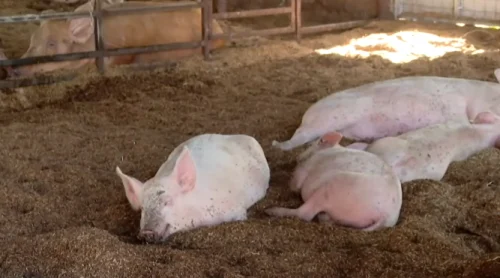
A pig farmer in Kenya has become one of the clearest examples of how quickly an animal-health crisis can become an economic crisis.
Peter Gitonga Kimani, a pig farmer in Ruai, Nairobi, reportedly lost 152 pigs after African Swine Fever (ASF) struck his farm. The losses were estimated at about KSh2.9 million.
The figure is striking on its own. But the bigger story is what happened beyond one farm.
Since mid-May 2026, more than 1,470 pigs have reportedly died from ASF across more than 20 farms in Kiambu County. Authorities have also reported significant outbreaks in six other counties: Tharaka-Nithi, Busia, Embu, Kakamega, Homa Bay and Migori.
That changes the way the outbreak should be viewed.
This is no longer simply a story about pigs dying from a viral disease. It is a story about lost capital, disrupted production, damaged livelihoods and the cost of disease control in a livestock value chain.
𝗧𝗵𝗲 𝗰𝗼𝘀𝘁 𝗼𝗳 𝗱𝗶𝘀𝗲𝗮𝘀𝗲 𝗯𝗲𝗴𝗶𝗻𝘀 𝗯𝗲𝗳𝗼𝗿𝗲 𝘁𝗵𝗲 𝗳𝗮𝗿𝗺𝗲𝗿 𝗹𝗼𝘀𝗲𝘀 𝗮 𝗽𝗶𝗴
When a pig dies from ASF, the obvious calculation is the market value of the animal.
That calculation is incomplete.
A commercial or semi-commercial pig represents accumulated investment: the cost of acquiring breeding stock or piglets, feed, medication, housing, labour, water, electricity, transport and veterinary services.
For a breeding animal, there is another layer of value. The farmer is also losing future piglets and future sales.
This means a disease outbreak can destroy several years of production potential in a matter of days.
The reported experience of Kimani illustrates that problem. His farm reportedly had 156 pigs, with 152 dying after the disease struck. The loss was estimated at KSh2.9 million.
The economic shock therefore was not simply the price of 152 carcasses.
It was the destruction of productive assets.
And that distinction matters when governments calculate the cost of livestock disease.
𝗧𝗵𝗲 𝟭,𝟰𝟳𝟬-𝗽𝗶𝗴 𝗳𝗶𝗴𝘂𝗿𝗲 𝗶𝘀 𝗮 𝗱𝗶𝘀𝗲𝗮𝘀𝗲 𝗲𝗰𝗼𝗻𝗼𝗺𝗶𝗰𝘀 𝗽𝗿𝗼𝗯𝗹𝗲𝗺
The scale of the current Kenyan outbreak makes the farm-level loss more significant.
More than 1,470 pigs have reportedly died in Kiambu since mid-May, with more than 20 farms affected. Reports also indicate outbreaks in six other counties.
The 1,470 deaths should therefore not be interpreted as the full economic cost.
They represent only the most visible component: dead animals.
There are also potentially affected pigs that survive but require additional veterinary attention, farms that temporarily stop moving animals, breeding programmes that are interrupted, farmers who lose future production, traders whose businesses slow down and processors who may face changes in supply.
There is also the cost of responding to the outbreak itself.
Veterinary authorities must investigate suspected cases, conduct surveillance, collect and test samples, trace animal movements, communicate with farmers and implement control measures.
The longer an outbreak continues, the greater the resources required to contain it.
This is why animal disease prevention is often considerably cheaper than disease response.
𝗞𝗲𝗻𝘆𝗮’𝘀 𝗽𝗶𝗴 𝘀𝗲𝗰𝘁𝗼𝗿 𝗶𝘀 𝗻𝗼𝘁 𝗮 𝘀𝗺𝗮𝗹𝗹 𝗺𝗮𝗿𝗸𝗲𝘁
The economic implications become clearer when the size of the sector is considered.
Kenya’s pig industry has been estimated to generate about KSh19.5 billion annually, equivalent to roughly 5% of livestock output. Industry stakeholders have also been pushing for stronger investment as pork demand grows.
That makes disease control an economic issue as much as a veterinary one.
Every pig lost represents income that does not reach a farmer.
Every breeding animal lost reduces future supply.
Every farm forced to suspend production reduces activity elsewhere in the value chain.
Feed suppliers, transporters, traders, slaughter facilities, processors and other businesses connected to pig production can all feel the consequences of a serious outbreak.
The economic damage therefore moves through the value chain.
𝗪𝗵𝘆 𝗔𝗦𝗙 𝗶𝘀 𝘀𝘂𝗰𝗵 𝗮 𝗱𝗶𝗳𝗳𝗶𝗰𝘂𝗹𝘁 𝗱𝗶𝘀𝗲𝗮𝘀𝗲 𝘁𝗼 𝗰𝗼𝗻𝘁𝗿𝗼𝗹
African Swine Fever is caused by African Swine Fever Virus (ASFV), a highly contagious virus that affects domestic and wild suids.
It is not a human disease.
However, the virus can move efficiently between pigs through direct contact and through contaminated materials, including feed, farm equipment, clothing and vehicles.
That creates a difficult control problem.
A farm does not have to purchase an infected pig deliberately for the virus to enter.
It can potentially arrive through a contaminated vehicle.
It can move on footwear or equipment.
It can be introduced through contaminated feed or pork products.
It can move when infected animals are transported.
And once the virus is established, controlling movement between farms and along the wider value chain becomes critical.
FAO identifies animal movement, contaminated materials and weaknesses in biosecurity as important pathways for ASF transmission.
This is why ASF cannot be treated as a problem that belongs only inside the pig pen.
It is a value-chain disease.
𝗧𝗵𝗲 𝗯𝗶𝗴𝗴𝗲𝘀𝘁 𝗽𝗿𝗼𝗯𝗹𝗲𝗺 𝗶𝘀 𝘁𝗵𝗮𝘁 𝘁𝗵𝗲𝗿𝗲 𝗶𝘀 𝗻𝗼 𝗾𝘂𝗶𝗰𝗸 𝗺𝗲𝗱𝗶𝗰𝗮𝗹 𝗳𝗶𝘅
ASF presents farmers with an uncomfortable reality: once infection becomes established, there is no simple treatment that can reverse the outbreak.
FAO states that there is currently no effective vaccine or treatment available as a general control solution, making prevention, biosecurity, surveillance, movement control and rapid response central to disease management.
WOAH has nevertheless issued updated 2026 guidelines for the evaluation and potential implementation of ASF vaccination programmes, reflecting the growing scientific interest in vaccination as part of future control strategies.
Research also shows why vaccine development is complicated. A vaccine candidate evaluated by researchers from the USDA and ILRI protected pigs against some ASF virus strains but performed poorly against others, highlighting the importance of matching vaccine strategies to the epidemiology and virus diversity involved.
For farmers today, however, that means the first line of defence remains considerably more basic:
Keep the virus out.
𝗧𝗵𝗮𝘁 𝗺𝗮𝗸𝗲𝘀 𝗯𝗶𝗼𝘀𝗲𝗰𝘂𝗿𝗶𝘁𝘆 𝗮𝗻 𝗲𝗰𝗼𝗻𝗼𝗺𝗶𝗰 𝗶𝗻𝘃𝗲𝘀𝘁𝗺𝗲𝗻𝘁
Biosecurity is sometimes presented to farmers as a technical veterinary requirement.
ASF demonstrates why that framing is too narrow.
Biosecurity is financial risk management.
A farmer spending money on controlled farm access, dedicated footwear, equipment disinfection, visitor restrictions, quarantine for incoming pigs, safe feed practices and movement records may feel that these measures add to production costs.
But the alternative can be much more expensive.
The difference is particularly stark when compared with the reported KSh2.9 million loss from a single farm.
A biosecurity measure that costs a fraction of that amount can look expensive only when the alternative is ignored.
Once a farm has lost most of its herd, the economics change completely.
The farmer must rebuild.
Breeding stock must be replaced.
Production has to restart.
Cash flow may disappear for months.
Debt obligations do not necessarily disappear with the pigs.
This is where animal health becomes directly connected to business continuity.
𝗧𝗵𝗲 𝗽𝗿𝗼𝗯𝗹𝗲𝗺 𝗴𝗼𝗲𝘀 𝗯𝗲𝘆𝗼𝗻𝗱 𝘁𝗵𝗲 𝗳𝗮𝗿𝗺 𝗴𝗮𝘁𝗲
One of the most important lessons from ASF is that individual farms cannot carry the entire disease-control burden.
A farmer can maintain good internal biosecurity and still face risks originating outside the farm.
That is because pigs, people, vehicles, equipment, feed and pork products move between locations.
FAO notes that in resource-limited settings, biosecurity can be weak across farms and other points in the value chain, while pigs may be difficult to trace and move readily between holdings.
This makes surveillance and traceability essential.
Veterinary authorities need to know where animals are moving.
Farmers need to report suspicious disease early.
Markets need systems that reduce unsafe movement.
Veterinary laboratories need the capacity to confirm suspected infections quickly.
And authorities need the ability to respond before infections become widespread.
The Kenyan outbreak, with cases reported across Kiambu and six other counties, demonstrates the scale of coordination required.
𝗪𝗵𝗮𝘁 𝗞𝗲𝗻𝘆𝗮’𝘀 𝗼𝘂𝘁𝗯𝗿𝗲𝗮𝗸 𝗺𝗲𝗮𝗻𝘀 𝗳𝗼𝗿 𝗔𝗳𝗿𝗶𝗰𝗮
Kenya’s experience matters beyond Kenya.
Pig production is expanding across several African markets, while demand for affordable animal-source protein and livestock-derived income continues to shape agricultural policy.
That growth creates an uncomfortable contradiction.
The larger the pig industry becomes, the larger the economic consequences of a major disease outbreak can become.
ASF is therefore a livestock-development issue.
Investments in genetics, feed, housing and market access can increase productivity. But without corresponding investment in animal-health systems, disease can erase those gains.
The African pig sector also faces structural challenges around smallholder production, movement of animals, limited farm-level biosecurity and uneven access to veterinary services. FAO has identified weak biosecurity and limited traceability as important challenges in resource-constrained production systems.
For countries with growing pig populations, the lesson is straightforward:
Production growth without disease preparedness creates a larger economic exposure.
𝗧𝗵𝗲 𝗡𝗶𝗴𝗲𝗿𝗶𝗮 𝗹𝗲𝘀𝘀𝗼𝗻
The Kenyan situation also has direct relevance for Nigeria.
Nigeria has a large and economically significant pig industry, but African Swine Fever remains one of the major disease threats to pig production. A recent review of Nigeria’s pig industry describes ASF as a highly infectious and contagious transboundary animal disease with potentially catastrophic effects on pig production.
The implication is not that Kenya’s outbreak will automatically translate into a similar outbreak elsewhere.
The lesson is about preparedness.
If a disease can eliminate a large proportion of a farmer’s herd in a matter of days, then surveillance cannot begin after farmers start reporting mass mortality.
Biosecurity cannot become a priority only during an outbreak.
And veterinary disease reporting cannot depend entirely on whether individual farmers recognise the disease early enough.
Preparedness has to exist before the first carcass appears.
𝗙𝗿𝗼𝗺 𝗮 𝗞𝗦𝗵𝟮.𝟵 𝗺𝗶𝗹𝗹𝗶𝗼𝗻 𝗹𝗼𝘀𝘀 𝘁𝗼 𝗮 𝗯𝗶𝗴𝗴𝗲𝗿 𝗮𝗴𝗿𝗶𝗰𝘂𝗹𝘁𝘂𝗿𝗮𝗹 𝗿𝗶𝘀𝗸
The most important figure in Kenya’s current ASF situation may not ultimately be 1,470.
It may be the amount that farmers, businesses and governments will spend trying to recover from the outbreak.
The reported KSh2.9 million loss suffered by one farmer shows how quickly an animal-health event can destroy productive capital.
The more than 1,470 pigs reported dead in Kiambu show that the problem can scale.
The six additional counties reported to have significant outbreaks show why disease containment cannot stop at the boundary of one farm or one county.
And the wider value of Kenya’s pig sector shows why the issue deserves attention beyond veterinary circles.
African Swine Fever is often discussed in terms of mortality.
Farmers experience it differently.
They experience it as lost investment.
Lost income.
Lost breeding stock.
Lost production.
Lost market opportunities.
And sometimes, as one Kenyan farmer’s reported KSh2.9 million loss demonstrates, the collapse of an entire business model within days.
That is the real cost of livestock disease.
Disease prevention is therefore not an additional cost to livestock production. It is part of protecting the investment that makes livestock production possible in the first place.


























Leave a Reply