
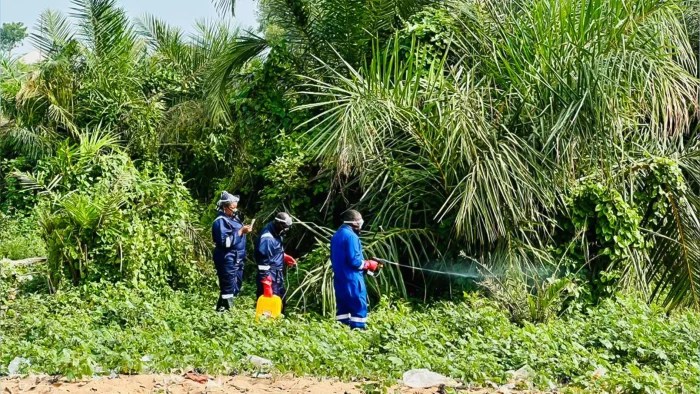
Nigeria has launched a coordinated, multi-state campaign targeting one of the most persistent but often underreported threats to livestock productivity and rural livelihoods: tsetse flies and the diseases they transmit.
Led by the Federal Ministry of Livestock Development, the intervention was executed between 20–24 April 2026 across the Federal Capital Territory, Kogi State, and Ogun State.
This is not a routine operation. It reflects a shift toward coordinated, data-driven vector control, with implications for livestock production, public health, and national food security.
Why tsetse control matters more than it appears
Tsetse flies transmit African Animal Trypanosomiasis (AAT) in livestock and Human African Trypanosomiasis (HAT) in people.
Across sub-Saharan Africa:
- Over 50 million cattle are at risk of trypanosomiasis
- The disease causes billions of dollars in annual agricultural losses
- It reduces milk yield, meat output, fertility, and draught power
According to the Food and Agriculture Organization of the United Nations, trypanosomiasis remains one of the largest biological constraints to livestock development in Africa.
In Nigeria, where livestock contributes significantly to rural income and food systems, the impact is both economic and systemic.
A coordinated, field-level intervention
The current campaign is built around an integrated vector management approach, consistent with global best practices promoted by the Pan African Tsetse and Trypanosomiasis Eradication Campaign.
Key components include:
- Biconical traps deployed at calibrated intervals
- Targeted fumigation of high-risk zones
- Insecticide treatment of livestock and breeding sites
- Community sensitisation and engagement
- Field surveillance and data collection
This combination is critical. Tsetse control is rarely effective when implemented as a single intervention.
Precision surveillance in the FCT
At Paikon Kore Grazing Reserve, home to over 15,000 cattle, operations have focused on structured epidemiological mapping.
Traps were placed at 500-meter intervals, a detail that signals a data-first approach rather than a blanket intervention.
According to field coordinators, this allows:
- Mapping of tsetse density
- Identification of breeding hotspots
- Targeted deployment of control measures
This is important because vector distribution is not uniform, and precision improves both efficiency and cost-effectiveness.
Linking animal health to public health
As noted by field epidemiologists, the campaign is not limited to livestock outcomes.
Trypanosomiasis is a zoonotic risk, meaning it affects both animals and humans.
The World Organisation for Animal Health continues to emphasize that animal health systems are a frontline defense for public health, particularly in rural and pastoral settings.
This places the campaign squarely within a One Health framework, where:
- Animal health
- Human health
- Environmental conditions
are treated as interconnected systems.
Kogi State: A strategic disease corridor
Operations in Kogi State covered six LGAs:
- Adavi
- Lokoja
- Koton Karfe
- Ajaokuta
- Ofu
- Idah
Kogi’s role is strategic.
Located at the intersection of major livestock movement routes, disease dynamics in the state can influence transmission patterns across multiple regions.
Officials noted that success in Kogi could produce a multiplier effect nationally, especially in controlling movement-linked disease spread.
Ogun State: Integrating control with veterinary services
In Ogun State, interventions were implemented across key livestock settlements, including:
- Owowo RUGA Community
- Alamutu RUGA Community
- Alabata Settlement
What stands out here is the integration of vector control with broader veterinary support, including:
- Free vaccination initiatives
- Strengthening of veterinary service delivery
This reflects an important principle:
𝗗𝗶𝘀𝗲𝗮𝘀𝗲 𝗰𝗼𝗻𝘁𝗿𝗼𝗹 𝗶𝘀 𝗺𝗼𝘀𝘁 𝗲𝗳𝗳𝗲𝗰𝘁𝗶𝘃𝗲 𝘄𝗵𝗲𝗻 𝗶𝗻𝘁𝗲𝗴𝗿𝗮𝘁𝗲𝗱 𝗶𝗻𝘁𝗼 𝗯𝗿𝗼𝗮𝗱𝗲𝗿 𝗹𝗶𝘃𝗲𝘀𝘁𝗼𝗰𝗸 𝘀𝘆𝘀𝘁𝗲𝗺𝘀.
The bigger livestock health context
Field reports also highlight the coexistence of other major diseases:
- Foot-and-Mouth Disease (FMD)
- Contagious Bovine Pleuropneumonia (CBPP)
This reinforces a key reality:
𝗩𝗲𝗰𝘁𝗼𝗿 𝗰𝗼𝗻𝘁𝗿𝗼𝗹 𝗰𝗮𝗻𝗻𝗼𝘁 𝗯𝗲 𝘃𝗶𝗲𝘄𝗲𝗱 𝗶𝗻 𝗶𝘀𝗼𝗹𝗮𝘁𝗶𝗼𝗻.
It must be part of a multi-disease management strategy, combining:
- Vaccination
- Surveillance
- Movement control
- Biosecurity
What makes this campaign different
Three elements stand out:
1. Simultaneous multi-state execution
This reduces reinfestation risks and improves overall impact.
2. Data-driven field design
Trap spacing and surveillance indicate a move toward evidence-based intervention.
3. Community-level engagement
Long-term success depends on pastoralist cooperation and behavioural change.
The challenge ahead
While the campaign is a strong step, sustainability will depend on:
- Continuous funding
- Follow-up surveillance
- Maintenance of control infrastructure
- Integration with national livestock policies
Tsetse control is not a one-time intervention. It requires long-term ecosystem management.
Conclusion
Nigeria’s latest intervention signals a shift toward structured, science-driven livestock health management.
By combining surveillance, vector control, and community engagement, the country is addressing not just a disease, but a systemic constraint to livestock productivity and rural development.
If sustained and scaled, this approach could significantly reduce the burden of trypanosomiasis, improve livestock output, and strengthen the resilience of Nigeria’s food systems.


 farmalert.online
For questions Leave a Reply