
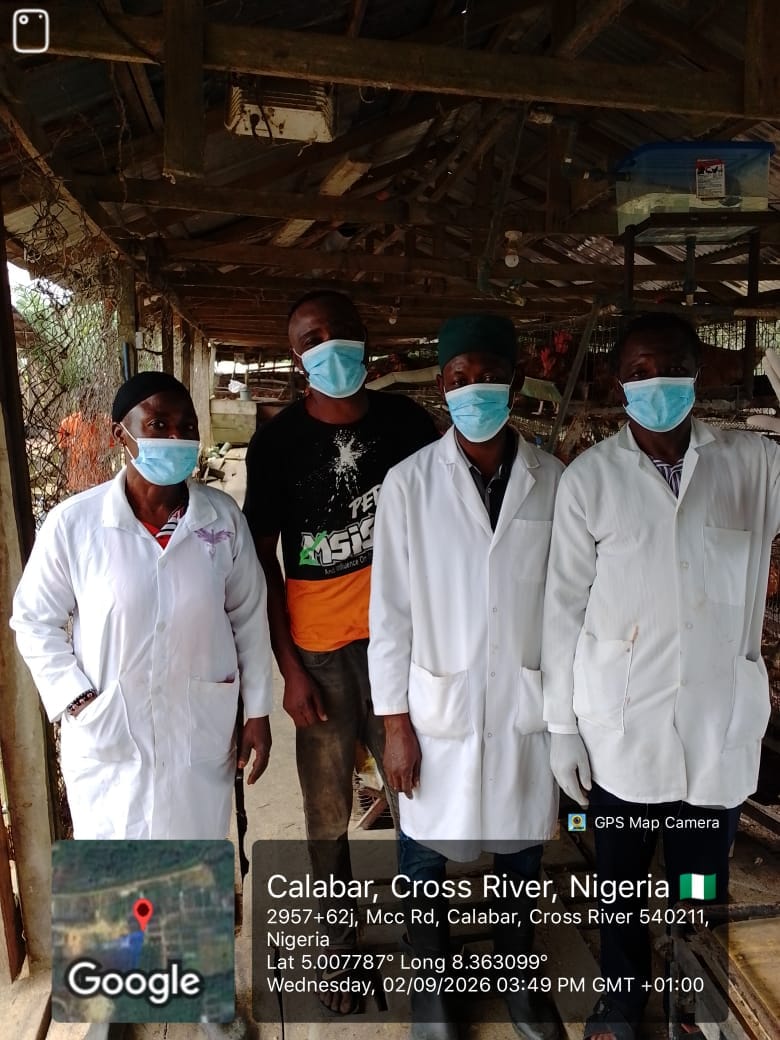
Nigeria has commenced a livestock disease surveillance exercise in Cross River State, targeting 600 samples as part of the country’s broader effort to eradicate Peste des Petits Ruminants by 2030.
The exercise, being conducted by the Federal Ministry of Livestock Development in collaboration with the Cross River State Government, is expected to generate scientific evidence on animal health and provide a clearer picture of organisms and disease strains circulating across the state.
But behind the 600 samples is a much bigger story about how Nigeria is trying to move from responding to livestock disease outbreaks to detecting, understanding and preventing them before they spread.
Why Cross River?
Cross River is not an ordinary location for livestock surveillance.
The state has a significant livestock population, major animal movement routes and an international border with Cameroon. It also serves as an important route for livestock moving into southern Nigeria.
According to Dr. U.J. Undiandeye, Director of Veterinary Services at the Cross River State Ministry of Livestock, animals entering the state from major livestock-producing areas such as Taraba, Benue and Adamawa could potentially introduce diseases.
The risk increases when infected animals purchased from markets are mixed with existing herds and flocks.
This makes livestock movement an important consideration in disease surveillance.
An animal may move from a production area to a market, from a market to another state and eventually across an international border. Without effective surveillance, an infection can travel alongside the animal before authorities have the opportunity to detect it.
Cross River’s proximity to Cameroon adds another layer to that risk.
Four locations selected for surveillance
The surveillance exercise covers four locations:
- Calabar Municipal
- Calabar South
- Ikom
- Ogoja
The locations were selected to provide representation across different parts of the state.
Field teams began collecting samples in Calabar Municipal before moving to Calabar South, Ikom and Ogoja.
Samples are being collected from different categories of animals and will be transported to the National Veterinary Research Institute (NVRI), Vom, Plateau State, for laboratory analysis.
Where samples become unusable during handling or transportation, additional samples are collected to replace them.
This is more than collecting blood samples
At the heart of the exercise is a fundamental principle of disease control:
You cannot effectively control what you cannot accurately detect.
Nigeria’s Chief Veterinary Officer, Dr. Samuel Anzaku, made this point during an earlier national PPR surveillance workshop in August, highlighting the gap between suspected outbreaks reported from the field and cases supported by laboratory confirmation.
Without reliable laboratory evidence, authorities may know that animals are becoming sick or dying but lack sufficient information to determine exactly what is circulating, where it is circulating and the level of population immunity.
The national surveillance programme is therefore designed to generate current and geographically representative evidence on PPR exposure, disease circulation and immunity among sheep and goat populations.
The Cross River exercise is one component of that broader national effort.
Why PPR matters
Peste des Petits Ruminants, commonly known as sheep and goat plague, is a highly contagious viral disease affecting small ruminants, particularly sheep and goats.
For livestock-dependent households, an outbreak is not simply a veterinary problem.
It can mean the loss of animals that represent household income, food, savings and economic security.
That is why Nigeria’s target of eradicating PPR by 2030 is significant.
The Federal Government’s national surveillance programme covers 10 states, 35 Local Government Areas and all six geopolitical zones, selected according to identified risk levels.
The participating states are:
Bauchi, Adamawa, Kano, Katsina, Benue, Plateau, Nasarawa, Cross River, Imo and Ogun.
The surveillance programme is expected to provide the evidence required to identify disease hotspots, understand population immunity and support targeted interventions.
From surveillance to vaccination
One of the most important outcomes of the Cross River exercise will come after the samples reach the laboratory.
The analysis is expected to help identify organisms and disease strains circulating in different environments.
That information can then guide decisions around vaccination and other veterinary interventions.
In other words, the objective is not simply:
“Collect 600 samples.”
The objective is:
Collect data → analyse the evidence → identify risk → target interventions → monitor the outcome.
This approach can make disease-control programmes more precise and potentially more efficient.
Rather than treating every location as though it carries exactly the same level of risk, surveillance data can help veterinary authorities determine where interventions are most urgently required.
The cold chain matters too
An often-overlooked part of disease surveillance happens between the animal and the laboratory.
A sample can be correctly collected but become unreliable if it is improperly stored or transported.
Cross River veterinary officials said the samples were stored in cold boxes with ice packs, with ice supplies replenished regularly to maintain the required temperature until the samples reached NVRI.
This attention to sample preservation is critical because laboratory results are only as useful as the quality and integrity of the samples on which they are based.
Farmers are part of the surveillance system
The exercise also involves direct engagement with livestock farmers.
Veterinary teams have been explaining the purpose of the surveillance, the sampling process and how the findings could ultimately benefit livestock owners.
This farmer engagement is important because effective disease surveillance does not happen entirely inside laboratories.
Veterinarians need access to farms and animals.
Farmers need to report unusual illness and deaths.
Animal health professionals need to recognise potential disease events.
Samples need to be collected correctly.
Laboratories need to produce reliable results.
And policymakers need to act on the evidence.
The surveillance chain is only as strong as its weakest link.
Cross River’s border makes biosecurity even more important
The development also connects with Nigeria’s broader efforts to strengthen livestock biosecurity at its borders.
In August, the Federal Government commissioned Nigeria’s first Border Animal Holding and Quarantine Facility at Nfum in Etung Local Government Area of Cross River State.
The facility was designed to strengthen border disease surveillance, livestock traceability and the safe movement of animals across borders.
The location of the new surveillance exercise therefore fits into a wider animal-health strategy in Cross River: monitor the animals, understand the disease risks and strengthen controls around livestock movement.
What happens next?
The immediate next step is laboratory analysis of the samples at NVRI, Vom.
The real value of the exercise, however, will depend on what happens with the information generated.
Will disease hotspots be identified?
What level of PPR exposure will be found?
Are there significant immunity gaps among sheep and goat populations?
Will the results change vaccination priorities?
And, perhaps most importantly, will surveillance continue after this exercise ends?
These questions will determine whether the 600 samples become more than a statistic.
A test of Nigeria’s 2030 PPR ambition
Nigeria’s 2030 PPR eradication target is ambitious.
Achieving it will require more than vaccination campaigns.
It will require reliable surveillance, laboratory capacity, quality sample collection, disease reporting, animal identification and traceability, responsible livestock movement, farmer participation, veterinary manpower and sustained political commitment.
The Cross River exercise represents one piece of that larger puzzle.
For now, 600 samples are being collected.
But what Nigeria ultimately needs from those samples is something much bigger:
evidence that tells veterinary authorities where the disease is, where the risks are greatest and what needs to be done next.
Because before Nigeria can eradicate PPR, it must first know where it is.


























Leave a Reply