
A new veterinary service delivery model is being tested in Kwara State as the Livestock Productivity and Resilience Support Project (L-PRES) begins a pilot programme designed to take private veterinary services closer to smallholder livestock farmers.
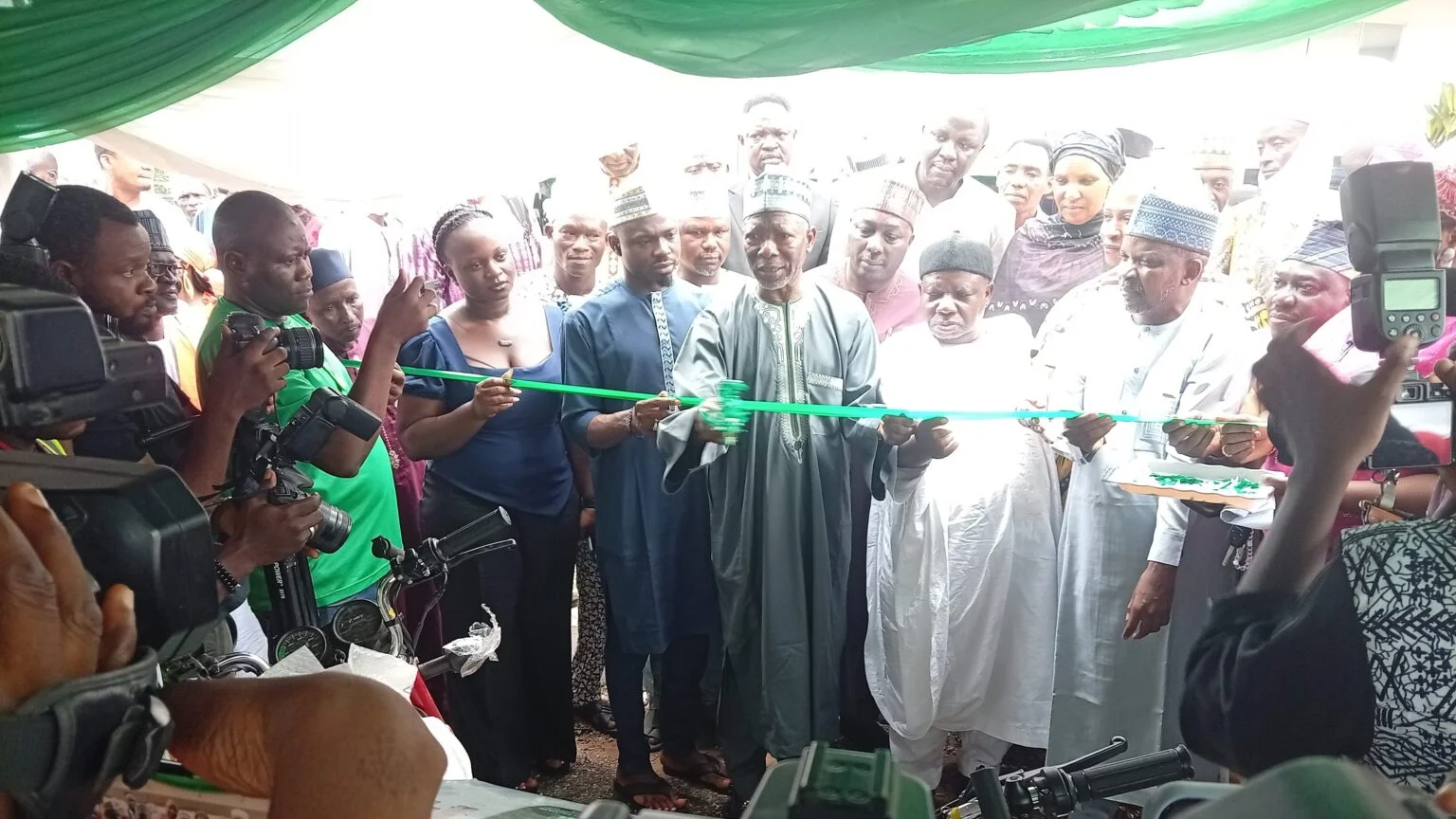
The pilot, launched in Kwara on 24 September 2026, brings together the Livestock Productivity and Resilience Support Project, the Federal Ministry of Livestock Development, the Kwara State Government and the World Bank.
Ten private veterinarians have initially been engaged under the programme, with L-PRES describing the initiative as an effort to address gaps in veterinary service delivery, reduce livestock losses and improve farmers’ livelihoods.
The project says the model is expected to be replicated across the 13 states participating in L-PRES, making the Kwara exercise more than a state-level intervention.
It is effectively a test of whether Nigeria can use the existing private veterinary workforce to extend animal-health services to livestock communities that are not adequately reached by conventional public veterinary facilities.
A different approach to the veterinary service gap
The decision to involve private practitioners is tied to a structural reality in Nigeria’s veterinary sector.
According to L-PRES National Animal Health Specialist Dr Mustapha Muhammed, about 85 percent of Nigeria’s 13,000 registered veterinarians work in the private sector, compared with approximately 15 percent in public service.
For a livestock farmer in a remote production cluster, however, the existence of private veterinarians in the country does not necessarily translate into access to veterinary care.
Distance, transportation costs, limited veterinary premises and the economics of serving dispersed smallholder farmers can all affect whether professional animal-health services reach the farm.
The new L-PRES model is therefore attempting to connect the private veterinary workforce with farmers through a structured programme rather than leaving service delivery entirely to market forces or existing public facilities.
Ten veterinarians begin the Kwara pilot
The first phase involves 10 private veterinarians, who have received equipment and logistics intended to support field-level service delivery.
The package includes motorcycles, veterinary injectables, consumables, refrigerators and portable medicine coolers.
The emphasis on mobility is significant.
Veterinary service delivery in livestock-producing communities often requires practitioners to travel to farms rather than waiting for animals to be brought to a clinic. For cattle, sheep and goats in particular, moving animals long distances simply to obtain routine veterinary attention can be impractical for farmers.
The pilot is consequently built around bringing the service provider closer to the livestock farmer.
L-PRES says the participating veterinarians will work within communities and livestock clusters around their premises, providing services to smallholder farmers.
The programme’s dedicated reporting platform describes the model as one in which privately owned veterinary premises are equipped with inputs, equipment and logistics to reach farms around them.
That distinction is important.
The project is not simply recruiting veterinarians.
It is attempting to build a service-delivery network around them.
The programme is designed to generate field-level data
Another feature of the new model is its emphasis on documenting veterinary activities.
The L-PRES Private Veterinary Service platform says services are recorded against registered farmers and independently verified before being included in programme reporting.
The system captures information such as the farmer, service provider, photograph, location and time of service, while the public dashboard is designed to publish only aggregated programme data.
The project says this system is intended to provide information on beneficiaries, animals reached, interventions and premises while protecting farmers’ personal information.
For livestock-health programmes, that type of data can be important beyond simple record keeping.
A vaccination carried out in a remote livestock cluster, for example, becomes part of a wider picture of where animals have been reached, which interventions have been delivered and which communities remain underserved.
It can also help programme managers identify gaps in coverage.
From individual treatment to disease surveillance
The wider significance of the pilot becomes clearer when viewed alongside L-PRES’s other investments in animal health.
The project is supporting the development of model veterinary hospitals across several states, with the hospitals intended to provide services including clinical diagnosis, disease surveillance and control, pharmacy and drug management, livestock extension, training, research, animal welfare and biosecurity.
Kwara is among the states where a model veterinary hospital is being developed. The state government formally handed over land for the project in February, describing the facility as an investment in animal-health services and livestock productivity.
At the federal level, the 2026 L-PRES workplan also includes the completion of 13 model veterinary hospitals, alongside continued vaccination programmes and investments aimed at strengthening disease prevention and control.
The private veterinary pilot therefore sits within a much larger attempt to expand Nigeria’s animal-health infrastructure.
One part of that system is the physical veterinary hospital.
Another is the veterinarian who can reach a farmer in a livestock cluster.
Kwara is already building its animal-health system
The latest pilot is not happening in isolation in Kwara.
Earlier this month, the state reported that L-PRES interventions had resulted in the vaccination of hundreds of thousands of animals, while the state has also invested in veterinary laboratory and cold-chain infrastructure.
During a September livestock-sector briefing, officials reported that the veterinary laboratory in Ilorin had been rehabilitated and its vaccine cold-chain system strengthened with solar power.
The state said the number of animals screened by the laboratory had increased from 157 to 246 following the intervention.
Kwara’s L-PRES programme has also reported 238,718 animals vaccinated against key livestock diseases, including cattle, sheep, goats and poultry, according to figures presented by the Presidential Livestock Reforms Implementation Committee during a recent livestock training programme.
The figures should be understood as programme-reported achievements rather than an independent assessment of statewide veterinary coverage.
Nevertheless, they illustrate the broader direction of the intervention: veterinary service delivery is being developed alongside vaccination, laboratory capacity, livestock water infrastructure, feed interventions and other production support.
The pilot follows another L-PRES push to strengthen frontline livestock services
Earlier in September, Kwara L-PRES also met with the state chapter of the Nigerian Association of Animal Health and Husbandry Technologists (NAAHHT) to discuss collaboration around animal-health, disease-control and extension services.
The association described its members as frontline actors in the livestock value chain and expressed willingness to support L-PRES interventions at community level.
This is significant because veterinary service delivery in rural livestock systems does not depend exclusively on veterinary doctors.
Veterinary paraprofessionals, animal-health technicians, extension personnel and community-level actors can all influence how quickly disease signs are detected and how farmers access professional support.
The emerging L-PRES approach therefore involves several layers of the livestock service system rather than relying on a single category of professional.
Feed, water and animal health are being addressed together
Kwara’s recent L-PRES activities also show that the state is approaching livestock productivity beyond veterinary treatment alone.
Earlier this month, 100 livestock farmers were trained in forage conservation and preservation as part of an effort to improve sustainable livestock feed production.
The training focused on helping farmers produce and preserve forage, an issue closely linked to livestock productivity, animal nutrition and the pressure created by seasonal feed shortages.
The state has also reported investments in livestock water infrastructure, including 67 solar-powered livestock water points, alongside climate-resilient livestock facilities.
The combination matters because animal health does not operate separately from production conditions.
A farmer who has access to veterinary treatment but lacks adequate feed, water or appropriate housing still faces significant production constraints.
L-PRES is therefore building several components of the livestock system simultaneously.
What the private veterinary model could change
The most important question now is whether the pilot can demonstrate that private veterinary services can be delivered sustainably to smallholder farmers at the scale required.
The challenge is not simply getting a veterinarian into a community.
The programme will need to show that farmers actually use the services, that animal-health interventions are delivered consistently, that disease detection improves and that the cost of reaching dispersed livestock holdings can be sustained.
The monitoring framework built into the programme will be important here.
If the pilot can produce reliable data on the number of farmers reached, animals treated or vaccinated, disease cases identified and communities served, L-PRES will have a stronger basis for deciding how the model should be expanded.
A national test begins in Kwara
L-PRES says 760 private veterinarians have been engaged alongside public-sector veterinary professionals, with the wider programme expected to serve about 11,000 livestock cluster communities across participating states.
Those figures put the 10-veterinarian Kwara pilot into perspective.
The current launch is relatively small, but the intended model is considerably larger.
If replicated, it could become one of the mechanisms through which Nigeria expands animal-health coverage beyond conventional government veterinary clinics and hospitals.
That could have implications for disease surveillance as well as individual treatment.
A veterinarian who regularly visits livestock farms is more likely to encounter unusual mortality, disease signs or emerging production problems early enough for them to be reported and investigated.
For a country dealing with recurring livestock disease threats, that frontline connection can be critical.
The next measure will be delivery, not launch
The launch gives the programme a starting point.
The more important story will be what happens after the launch.
Will the 10 veterinarians consistently reach farmers?
How many animals will they actually serve?
Which diseases will they encounter?
How quickly will suspected outbreaks be reported?
Will farmers continue to use the services?
And can the model be replicated across other L-PRES states without losing quality or becoming financially unsustainable?
Those are the questions that will determine whether Kwara becomes a demonstration of a workable new approach to veterinary service delivery or simply another livestock-sector intervention.
For now, Nigeria has begun testing a model that puts private veterinarians, public livestock institutions, digital reporting and community-level animal-health delivery in the same system.
The results from Kwara could determine how far that model travels next.
























Leave a Reply