
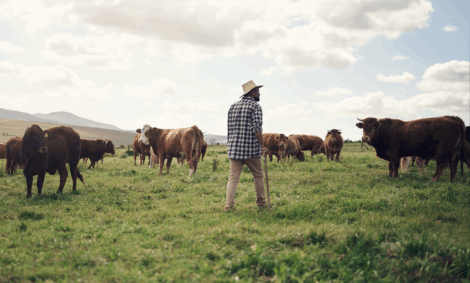
On 15 April 2026, the World Organisation for Animal Health issued a stark warning:
Foot-and-Mouth Disease (FMD), specifically the SAT1 serotype, is no longer confined to Africa-it is now a rapidly evolving global threat.
This is not just another outbreak cycle.
It is a structural shift in global animal disease dynamics—with direct implications for food security, livestock economies, and international trade systems.
A Virus Crossing Borders Faster Than Policy Can Respond
According to World Organisation for Animal Health, SAT1 has now spread beyond its historical African range into:
- Southern Africa
- The Middle East
- Asia
- Parts of Europe
This expansion is unprecedented for this serotype, which was previously considered geographically limited.
Supporting this, the Food and Agriculture Organization of the United Nations confirms that SAT1 has already been detected in regions where livestock populations have little to no immunity, increasing vulnerability to rapid outbreaks.
Even more concerning:
FAO risk assessments indicate that further spread is “very likely” in the near term, driven by cross-border livestock movement and weak surveillance systems.
Why SAT1 Is a Game-Changer
Foot-and-Mouth Disease is not new—but SAT1 changes the equation.
FMD is:
- One of the most contagious livestock diseases globally
- Capable of infecting 70+ species of cloven-hoofed animals
- Economically devastating due to trade restrictions and production losses
But the real danger lies in this:
There is no cross-protection between FMD serotypes
Vaccines for common strains (O, A, Asia-1) do NOT protect against SAT1
This means many countries currently vaccinating livestock are functionally unprotected against the emerging threat.
The Evidence: SAT1 Is Already Spreading
Recent surveillance data and outbreak reports show:
- New SAT1 outbreaks confirmed in Southern Africa (e.g., Lesotho) in early 2026
- First detections and emergency responses in Middle Eastern regions
- Expansion across Near East and West Eurasia risk corridors
The FAO Emergency Prevention System and global laboratory networks are actively tracking these movements, confirming that SAT1 is no longer geographically predictable.
A Direct Threat to Food Systems and Trade
The implications go far beyond animal health.
According to both World Organisation for Animal Health and Food and Agriculture Organization of the United Nations:
- FMD outbreaks trigger immediate trade restrictions
- Countries risk losing FMD-free status overnight
- Livestock-dependent economies face massive financial losses
- Rural livelihoods and food systems are directly impacted
FMD is classified as a transboundary animal disease (TAD)—meaning its spread can destabilize entire regional economies.
Surveillance Failures Are the Weakest Link
A central message from WOAH is clear:
The biggest risk is not the virus—it’s delayed detection.
Through its global reporting system,
World Animal Health Information System, WOAH emphasizes:
- Early reporting enables rapid containment
- Transparency builds international trust in trade
- Delays allow silent cross-border spread
Yet in many regions, especially across parts of Africa and Asia:
- Informal livestock movement remains poorly tracked
- Diagnostic capacity is limited
- Surveillance systems are under-resourced
Vaccination Strategies Are Now Obsolete
WOAH’s call to action includes a critical directive:
Countries must review and update vaccine antigen composition
Why?
Because:
- Existing vaccines may not match circulating SAT1 strains
- Without antigen matching, vaccination becomes ineffective
- Poor vaccine alignment accelerates silent transmission
The GF-TADs—a joint initiative of WOAH and FAO—is now central to coordinating vaccine strategy, surveillance, and response globally.
The Global Response Framework
WOAH is urging countries to take immediate, coordinated action:
1. Strengthen surveillance and diagnostics
Early detection is the first line of defense.
2. Conduct virus characterization and genotyping
Track how SAT1 is evolving in real time.
3. Update vaccination strategies
Ensure vaccines match circulating strains.
4. Improve preparedness and contingency planning
Simulations, rapid response systems, and inter-agency coordination.
5. Enhance regional collaboration
Because FMD does not respect borders.
The WOAH/FAO Reference Laboratory Network is already providing:
- Diagnostic confirmation
- Antigen matching
- Scientific advisory support
What This Means for Africa – and Nigeria
Africa is no longer just the origin point of SAT1-it is now central to global containment efforts.
For countries like Nigeria, this signals:
- Urgent need to upgrade national surveillance systems
- Strategic investment in diagnostics and veterinary infrastructure
- Transition from reactive control → predictive disease management
- Opportunity for private sector innovation in:
- Vaccine distribution
- Disease intelligence
- Livestock advisory services
Final Insight: This Is a Systems Problem, Not Just a Disease
SAT1 is exposing a deeper issue:
👉 Global animal health systems are not evolving as fast as pathogens
What we are witnessing is not just an outbreak-but a stress test of global veterinary preparedness.
And the outcome will depend on one thing:
How quickly countries move from awareness to action.


 farmalert.online
For questions Leave a Reply